African Giant Snail (Achatina fulica Bowdich 1822)
Naming
Bekicot scientiically named as Achatina fulica atau Lissachatina fulica in Latin. Internationally in English, thi animal is known as African giant snail.
Taxonomy
| Kingdom | Metazoa |
|---|---|
| Phylum | Mollusca |
| Class | Gastropoda |
| Order | Stylommatophora |
| Family | Achatinidae |
| Genus | Achatina |
| Species | Achatina fulica |
Origin and Distribution
This animal originates from East Africa and has spread throughout the world through introductions. African giant snails are now distributed to all continents except Antarctica. Madagascar was the site of the first introduction outside of Africa, from Kenya before 1800. From Madagascar, the animal was then introduced to Mauritius and then to various parts of the world (Ayyagari and Sreerama, 2017).
Characteristic
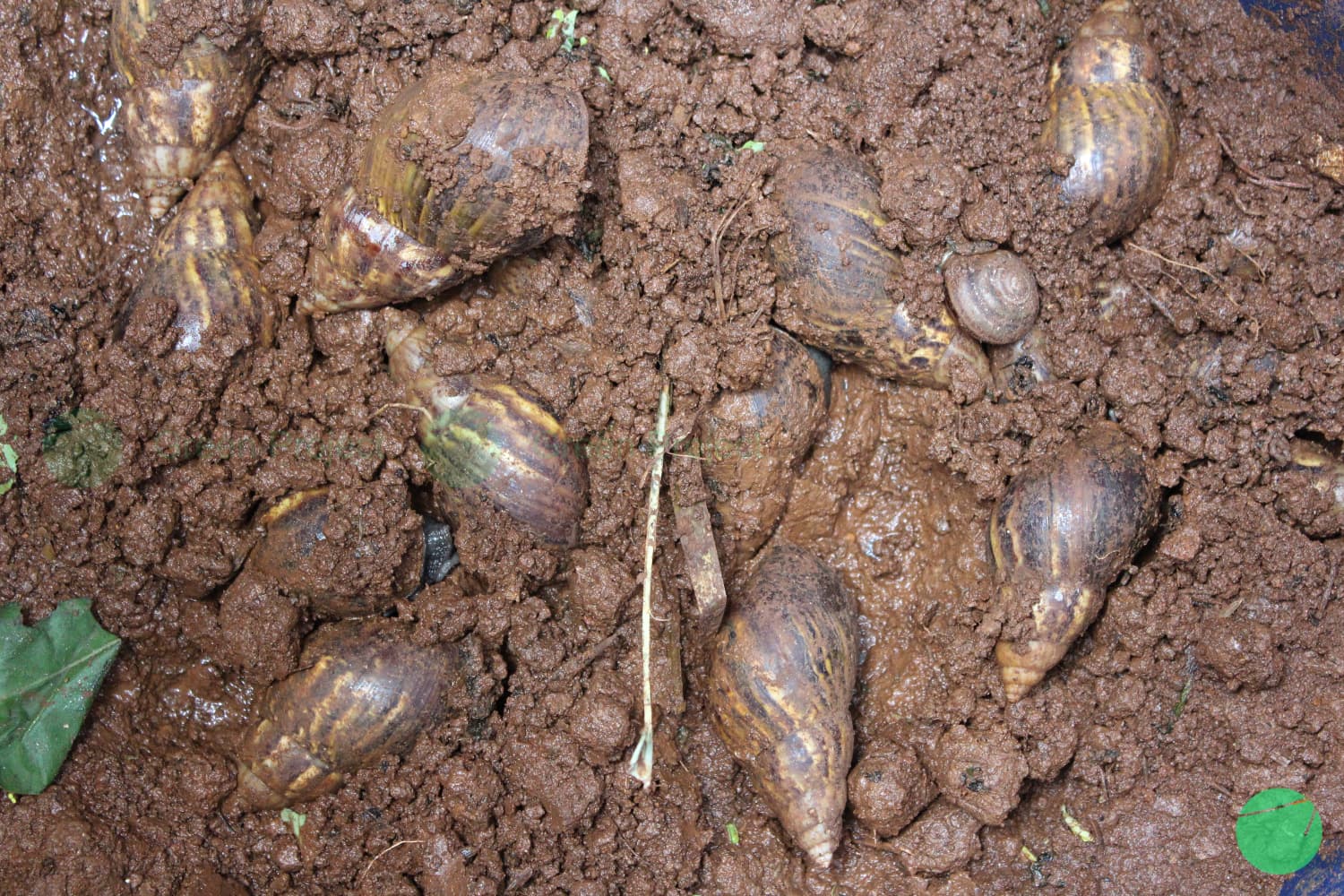
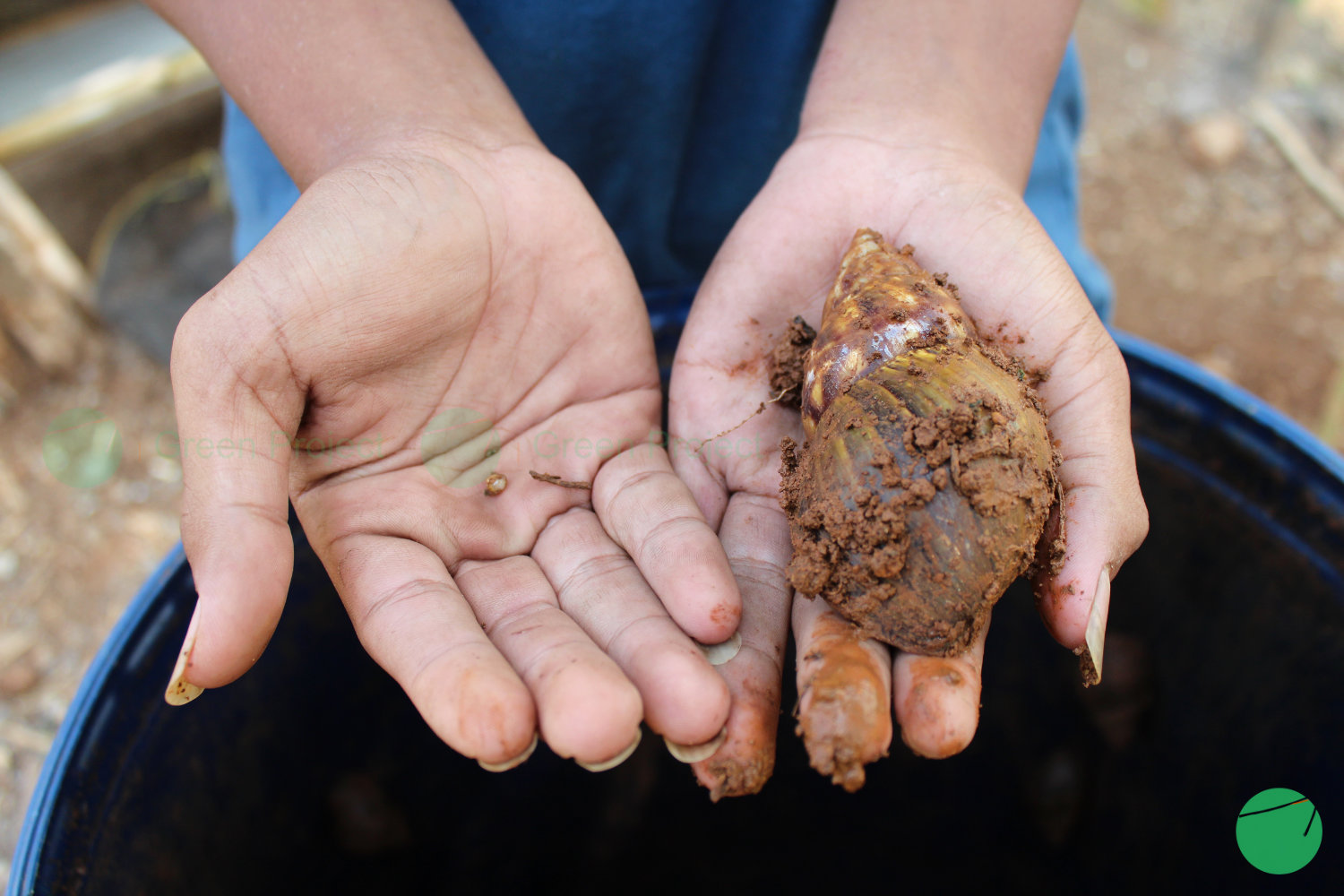
African giant snails are pulmonate land snails found throughout the world, except for Antarctica. They can grow up to 20 cm in length, but typically have shells between 5 and 10 cm.
Africal giant snils have several color variations, but are generally light brown with brown and cream stripes. The mantle on their body is dark brown with a rubbery shell.
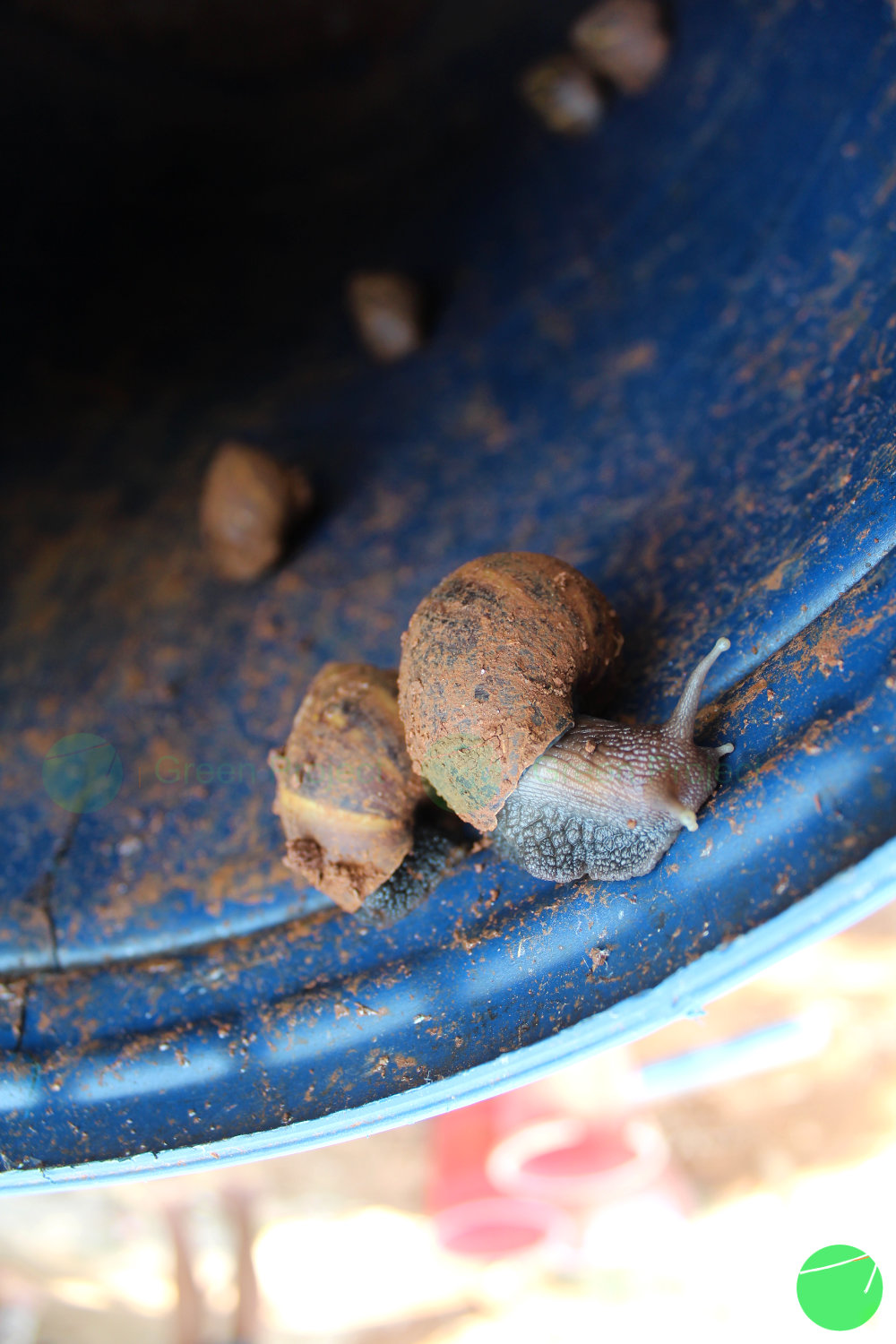
The shell opening is ovoid to crescent-shaped, with a sharp, non-reflective outer lip. Two pairs of tentacles are attached to the head. The lower pair is short, and the upper pair is large, with round eyes located at the tip.
The mouth has horny mandibles, and the radula contains approximately 142 rows of teeth, with 129 teeth per row. Their eggs are round to ellipsoidal, measuring between 4.5 and 5.5 mm in diameter and yellow to cream in color (Vogler and Beltramino, 2022).
Snail Content
According to Angga Dedy Saputro, in his 2022 research report, African giant snails contain several nutrients, including manganese, magnesium, copper, iron, and phosphorus. Furthermore, these animals are low in calories and contain a high amount of protein.
African giant snails are also believed to contain many amino acids and are rich in B-complex vitamins, minerals, calcium, and phosphorus, making them a potential alternative ingredient for animal feed (Asy'ari, 2022).
African Giant Snails as Food Ingredients and Export Commodity Industry
These species are known to be a popular ingredient in French escargot dishes. The types of snails that can be used for escargot are Helix pomatia and Elona quimperiana. Due to the high market demand for these animals, many local communities in Kediri have started snail farming businesses for export. The A. fulica snail is widely used as an ingredient in snail satay in Kediri.
Snail Flour Processing as Feed
A study conducted by Muhammad Habbibul Asy'ari found that snail meal supplementation had no significant effect on broiler production performance, feed consumption, body weight gain, or feed conversion.
However, research conducted by Dewi Rosalia and colleagues found that snail meal, processed into meal, can be used as an alternative to fish meal, up to 25% as a feed ingredient for snakehead fish. It can be used in a ratio of 75% fish meal to 25% snail meal to achieve optimal growth in absolute growth, daily growth, feed conversion ratio, and protein retention.
The Impact of Snails as Pests and on Human Health
The snail, or A. fulica, is a fast-growing, polyphagous plant pest that has been introduced from its native East Africa to many parts of the world as a commercial food source (for humans, fish, and livestock) and as a pet. Snails readily attach to transportation or machinery at any stage of development and are capable of aestivation in cooler conditions, making them easy to transport over long distances. Once afloat, snails successfully establish themselves and reproduce prolifically in tropical and some temperate regions (Vogler and Beltramino, 2022). This makes them an invasive pest, listed as one of the 100 most invasive species worldwide by the World Conservation Union (IUCN).
Snails are dangerous pests that can damage human health and agricultural crops. According to Ayyagari and Sreerama, in a scientific journal published in 2017, snails are vectors of the rat lungworm Angiostrongylus cantonensis, which causes eosinophilic meningitis in humans, Angiostrongylus costaricensis, which causes abdominal angiostrongyliasis, and another worm, Angiostrongylus abstrusus, whose effects are unknown.
The rat lungworm parasite Angiostrongylus costaricensis is transmitted to humans through ingestion of raw, undercooked snails or freshwater shrimp. Therefore, it is recommended to wash hands after handling snails. Furthermore, snails are said to act as hosts for parasites in wildlife and domestic animals, as reported in Brazil (Vogler and Beltramino, 2022).
In addition to causing damage to human health, snails are also said to carry several pathogens that attack various plants.
Location
Daftar Pustaka
Asy'ari, Muhammad. THE EFFECT of ADDITION of SNAIL (Achatina Fulica) FLOUR in COMMERCIAL FEED on FEED INTAKE, BODY WEIGHT GAIN, and FEED CONVERSION. repository.unair.ac.id/96114/2/2.%20%20ABSTRACT.pdf. Accessed 29 Sept. 2023.
Ayyagari, Vijaya Sai, and Krupanidhi Sreerama. "Evaluation of Haplotype Diversity of Achatina Fulica (Lissachatina) [Bowdich] From Indian Sub-continent by Means of 16S rDNA Sequence and Its Phylogenetic Relationships With Other Global Populations." 3 Biotech, vol. 7, no. 4, Springer Science+Business Media, July 2017, https://doi.org/10.1007/s13205-017-0877-4.
Rosalia, Dewi, et al. Kajian Pemanfaatan Tepung Bekicot (Achatina Fulica) Sebagai Bahan Baku Pakan Benih Ikan Gabus Channa Striata (Bloch,1793). repository.lppm.unila.ac.id/5489/1/jurnal%20kajian%20pemanfaatan%20tepung%20%20%20bekicot%20sebagai%20bahan%20baku%20pakan%20buatan%20untuk%20benih%20ikan%20gabus.pdf. Accessed 29 Sept. 2023.
Saputro, Angga Dedy. "KLASIFIKASI CITRA BEKICOT MENGGUNAKAN CONVOLUTIONAL NEURAL NETWORK - Repository UMBY." Mercubuana-Yogya.ac.id, 2022, http://eprints.mercubuana-yogya.ac.id/id/eprint/17106/1/ABSTRAK.pdf. Accessed 29 Sept. 2023.
Vogler, Roberto E., and Ariel A. Beltramino. "Achatina Fulica (Giant African Land Snail)." CABI Compendium, Jan. 2022, https://doi.org/10.1079/cabicompendium.2640. Accessed 29 Sept. 2023.