Oriental Garden Lizard (Calotes versicolor)
Naming Identity
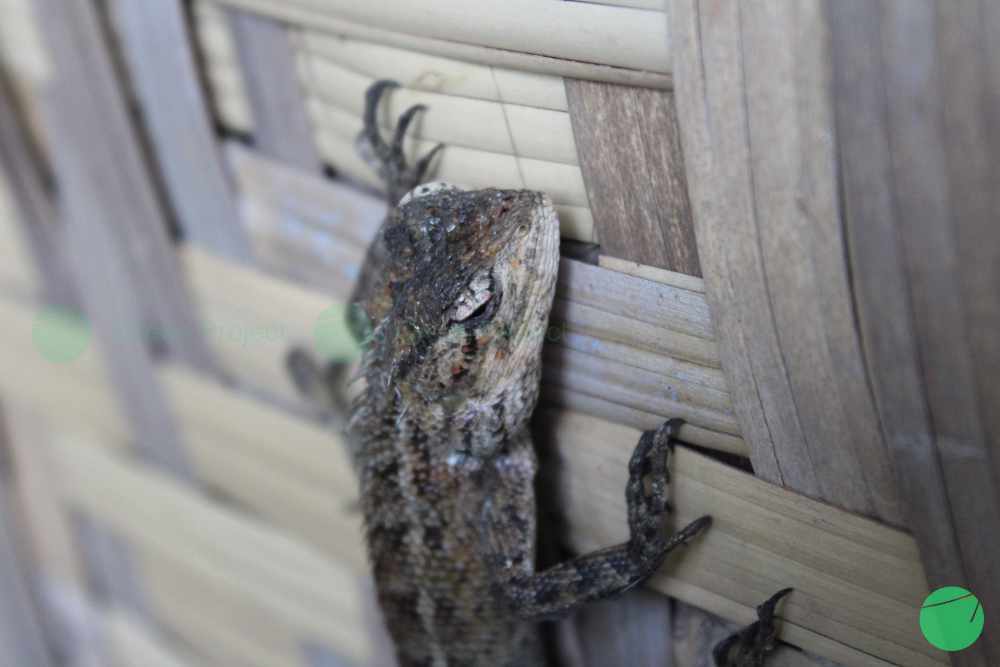
The oriental garden lizard is scientifically known in Latin as Calotes versicolor. Internationally, in English, this animal is known as the oriental garden lizard, eastern garden lizard, Indian garden lizard, common garden lizard, bloodsucker, or changeable lizard.
Taxonomy
| Kingdom | Animalia |
|---|---|
| Phylum | Chordata |
| Class | Reptilia |
| Order | Squamata |
| Family | Agamidae |
| Genus | Calotes |
| Species | Calotes versicolor |
Origin and Distribution
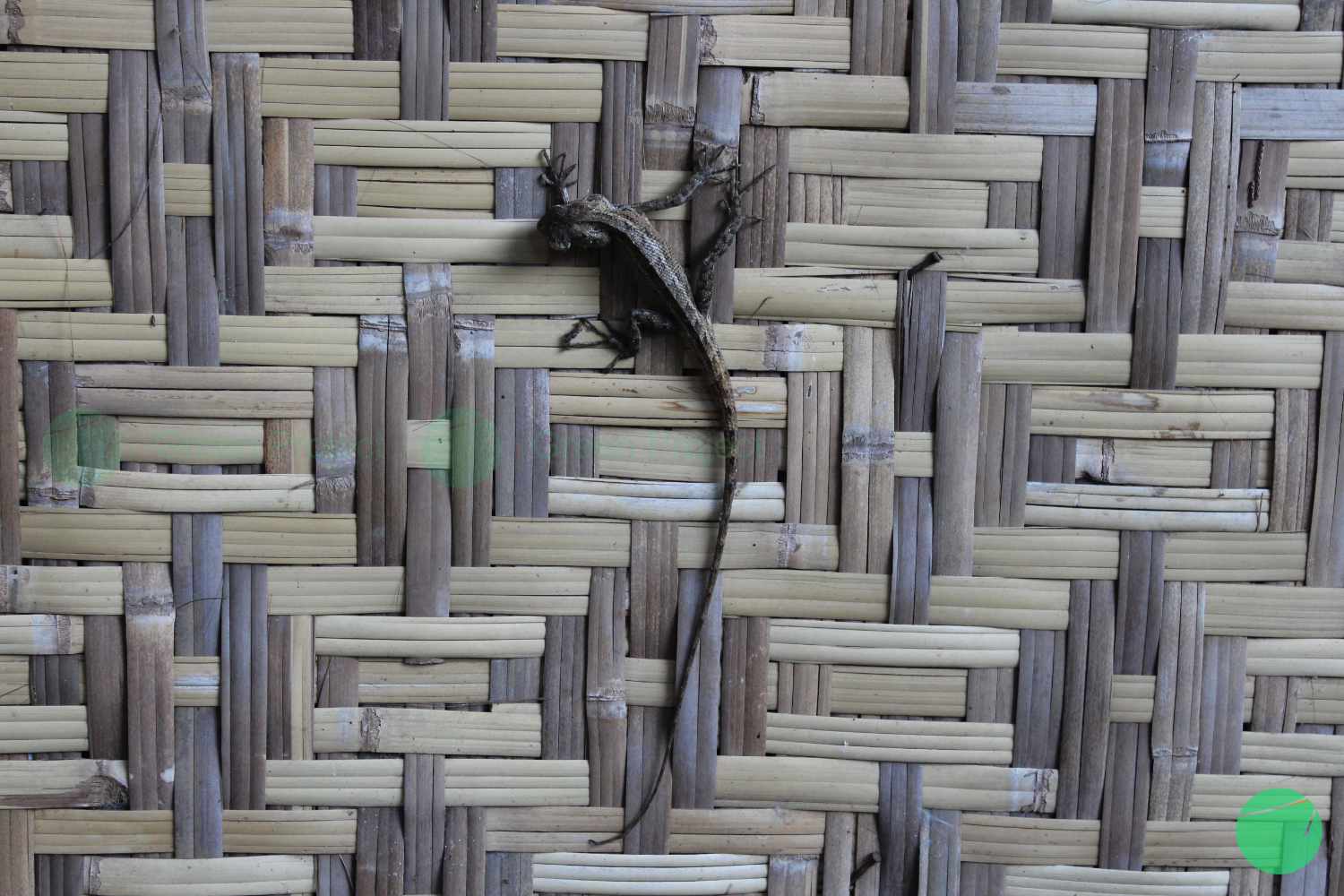
The genus Calotes Cuvierm 1817 is a diverse genus with species distributed throughout Southeast Asia, South Asia, and Oceania. Meanwhile, the Calotes versicolor, or oriental garden lizard, is a species whose distribution extends from eastern Iran to southern China and eastern Indonesia, and was later introduced to parts of Africa and North America (Gaurang Gowande et al., 2021).
Other sources state that the oriental garden lizard originated in Thailand, with its spread to Indonesia likely occurring after it was released into the wild while being kept as a pet. This is believed to be due primarily to its rare population in Indonesia before the 2000s (Zen et al., 2021).
Characteristics
The oriental garden lizard is a type of insectivorous reptile that lives in trees and is characterized by its zygodactyl feet (four toes; two facing forward and two facing backward). Its teeth are acrodant denticles (teeth that attach directly to the edge of the jaw) (Zen et al., 2021).
This animal can grow to a body length of up to 10 cm from snout to vent and 37 cm from tail to head. It is generally green or brown in color with a horizontally flattened body. Male oriental garden lizards typically have brighter colors than females.
During territorial fights and mating seasons, male oriental garden lizards display an orange dewlap (a fold of skin that hangs below the throat) and a crest along the back. This coloration turns red when victorious in a fight or during mating. This is what earned him the nickname bloodsucker ("Calotes | Asian, Agamid & Lizard | Britannica," 2023).
Development of Invasive Nature
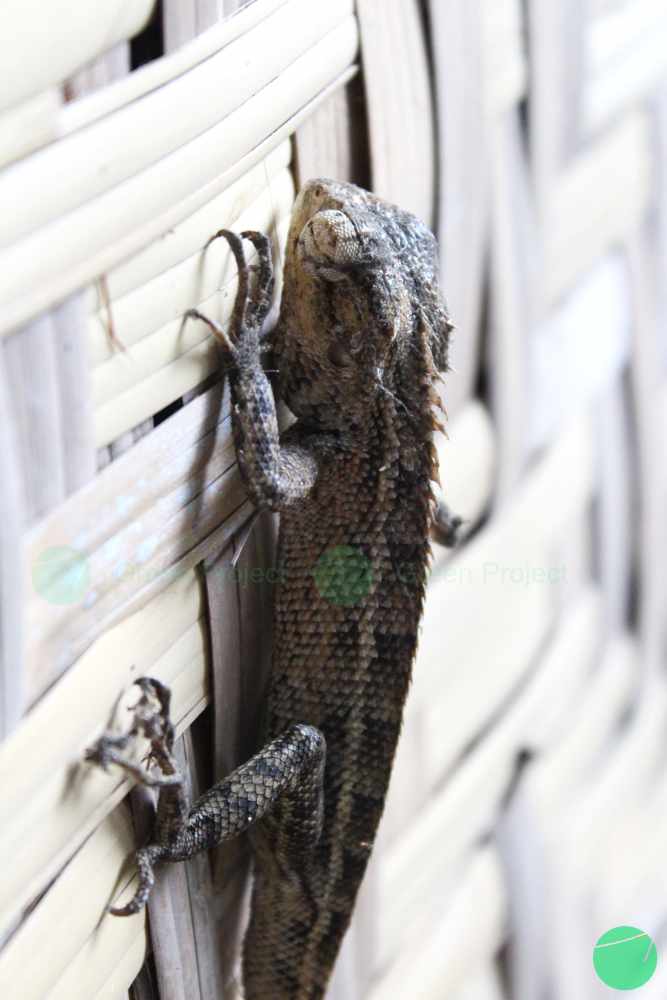
Oriental garden lizard are now becoming more common on the island of Java, posing a threat to local lizards, particularly the Bronchocela cristatella or bunglon surai (Zen et al., 2021).
In Singapore, according to a report by Das et al., 2008, this species is said to have replaced the local population of Bronchocela cristatella after invading the area in the early 1980s. Its arrival in Singapore is thought to have taken advantage of railway connections from northern Malaysia and Thailand.
Meanwhile, in Borneo, this species is said to have gradually replaced local lizard species through its insectivorous nature (eating insects) such as B. cristatella, Dasia olivacea, D. grisea, and Draco sumatranus. It also acts as a predator of local invertebrates and small invertebrates in the area.
Location
Bibliography
Calotes | Asian, Agamid & Lizard | Britannica. (2023). In Encyclopædia Britannica. https://www.britannica.com/animal/Calotes
Das, I., Charles, J. K., & Edwards, D. S. (2008, December). Calotes versicolor (Squamata: Agamidae)---A New Invasive Squamate for Borneo. ResearchGate; Herpetological Society of Japan. https://www.researchgate.net/publication/247887393_Calotes_versicolor_Squamata_Agamidae-A_New_Invasive_Squamate_for_Borneo
Gaurang Gowande, Pal, S., Jablonski, D., Rafaqat Masroor, Phansalkar, P. U., Dsouza, P., Aditi Jayarajan, & Shanker, K. (2021). Molecular phylogenetics and taxonomic reassessment of the widespread agamid lizard Calotes versicolor (Daudin, 1802) (Squamata, Agamidae) across South Asia. Vertebrate Zoology, 71, 669--696. https://doi.org/10.3897/vz.71.e62787
Zen, S., Andre Pramono, W., Abrori, Z., Sartika Sulistiani, W., Sutanto, A., & Widowati, H. (2021). Bunglon Surai (Bronchocela jubata Dumeril & Bibron, 1837). CV. LADUNY ALIFATAMA. https://repository.ummetro.ac.id/files/artikel/2941.pdf