Potential Benefits of Cherry for Managing Diabetes
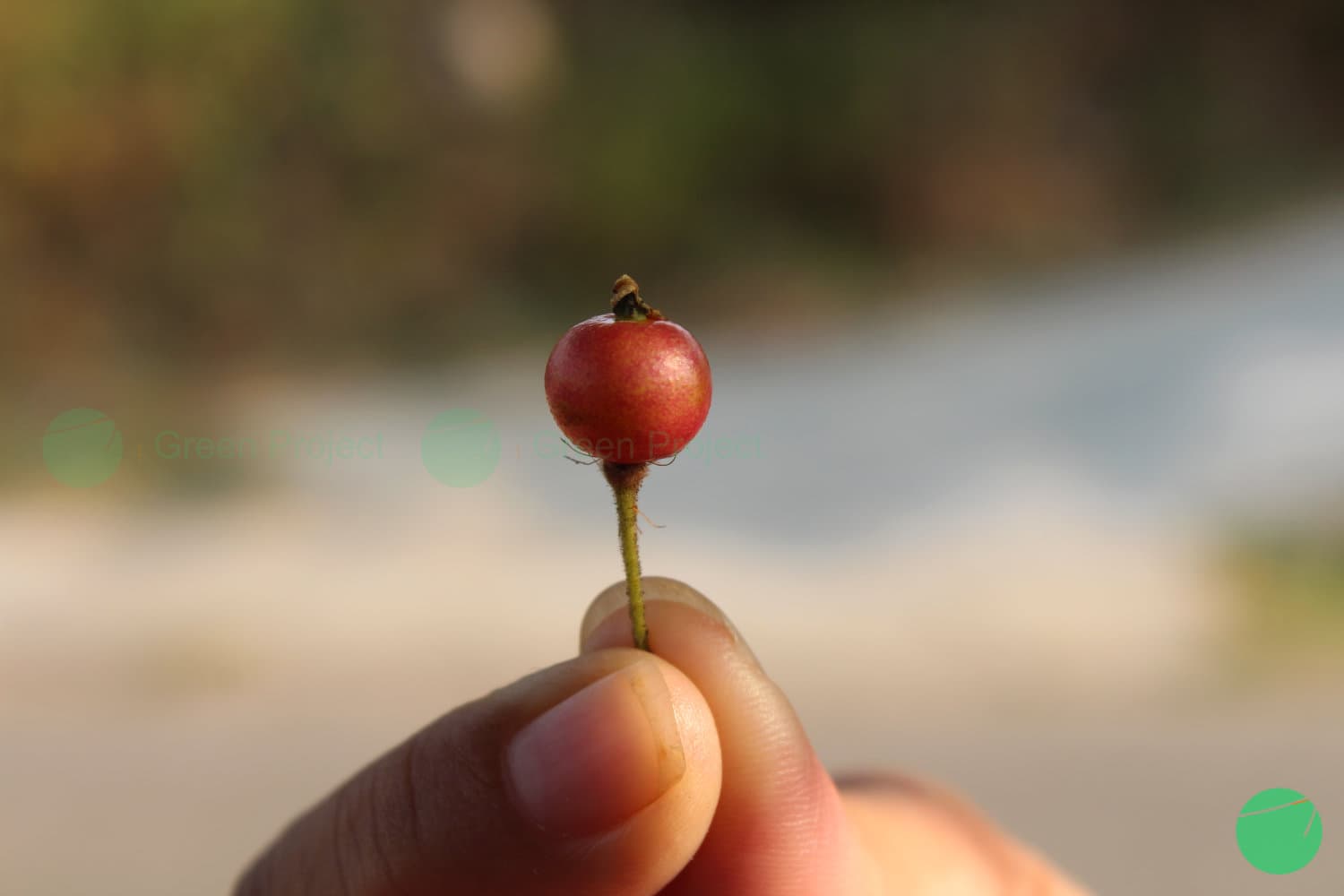
Muntingia calabura, commonly known as kersen or cherry, is a plant native to tropical regions of the Americas, particularly southern Mexico, Belize, Costa Rica, El Salvador, Guatemala, and Peru.
According to one report, the plant was introduced from Mexico to the Philippines in the late 19th century, and subsequently to Thailand, before reaching the Malay Peninsula and Singapore in 1895, and later Indonesia (Areces-Berazain). Bats and green pigeons are considered to be the main agents responsible for the presence of kersen in vacant areas on the island of Borneo.
Its distribution throughout Southeast Asia, combined with its rapid growth and ability to adapt to different environments, has made the plant widespread and easily found across the region. As a result, many people mistakenly assume that it is native to Southeast Asia.
Kersen can grow up to approximately 13 metres in height and is commonly found in humid tropical lowlands. The tree has an estimated maximum lifespan of around 30 years. Its dense foliage provides shade and can serve as shelter for livestock.
The plant produces small fruits measuring approximately 0.7–1.3 cm in diameter, containing numerous seeds embedded within soft flesh. The fruit is green when unripe and turns red when ripe, with a sweet taste.
It is important to note that kersen, particularly its leaves, contains numerous compounds and nutrients that may benefit health. These include flavonoids, saponins, tannins, alkaloids, triterpenoids, glycosides, anthraquinones, phenols, water, protein, fat, carbohydrates, fibre, ash, calcium, phosphorus, iron, carotene, thiamine, riboflavin, niacin, and vitamin C.
Traditionally, kersen leaves have been used as remedies for fever, gout, coughs, high blood sugar, and diabetes, as well as a natural antiseptic. Numerous studies have been conducted to investigate the potential of kersen leaves in supporting the management of diabetes.
Meanwhile, the flowers have traditionally been used as an antiseptic and to treat stomach cramps and spasms. They have also been used to relieve headaches, flu symptoms, and common colds. Pharmacological studies examining compounds found in kersen fruit have further supported some of its traditional uses, particularly in relation to pain management, inflammatory conditions, and antioxidant activity (Preethi et al.).
Bibliography
Areces-Berazain, Fabiola. "Muntingia Calabura (Jamaica Cherry)." CABI Compendium, vol. CABI Compendium, Jan. 2022, https://doi.org/10.1079/cabicompendium.35164.
Jamaican Cherry - Muntingia Calabura. uforest.org/Species/M/Muntingia_calabura.php.
Herawati, Vitri Dyah. PENGARUH REBUSAN DAUN KERSEN (MUNTINGIA CALABURA L) TERHADAP TINGKAT KADAR GULA DARAH PADA PESERTA DIABETES MELLITUS TIPE II PROLANIS. Universitas Sahid Surakarta, 2021.
Preethi, Kathirvel, et al. "Anti-inflammatory Activity of Muntingia Calabura Fruits." Pharmacognosy Journal, vol. 4, no. 30, ISSN 0975-3575, 2012, pp. 51--56. ScienceDirect, www.sciencedirect.com/science/article/abs/pii/S0975357512800666.
Zolkeflee, Nur Khaleeda Zulaikha et al. "In Vitro Anti-Diabetic Activities and UHPLC-ESI-MS/MS Profile of Muntingia calabura Leaves Extract." Molecules (Basel, Switzerland) vol. 27,1 287. 4 Jan. 2022, doi:10.3390/molecules27010287