Rüdesheim am Rhein: Cultural Landscape and Ecological Dynamics Along the Rhine River
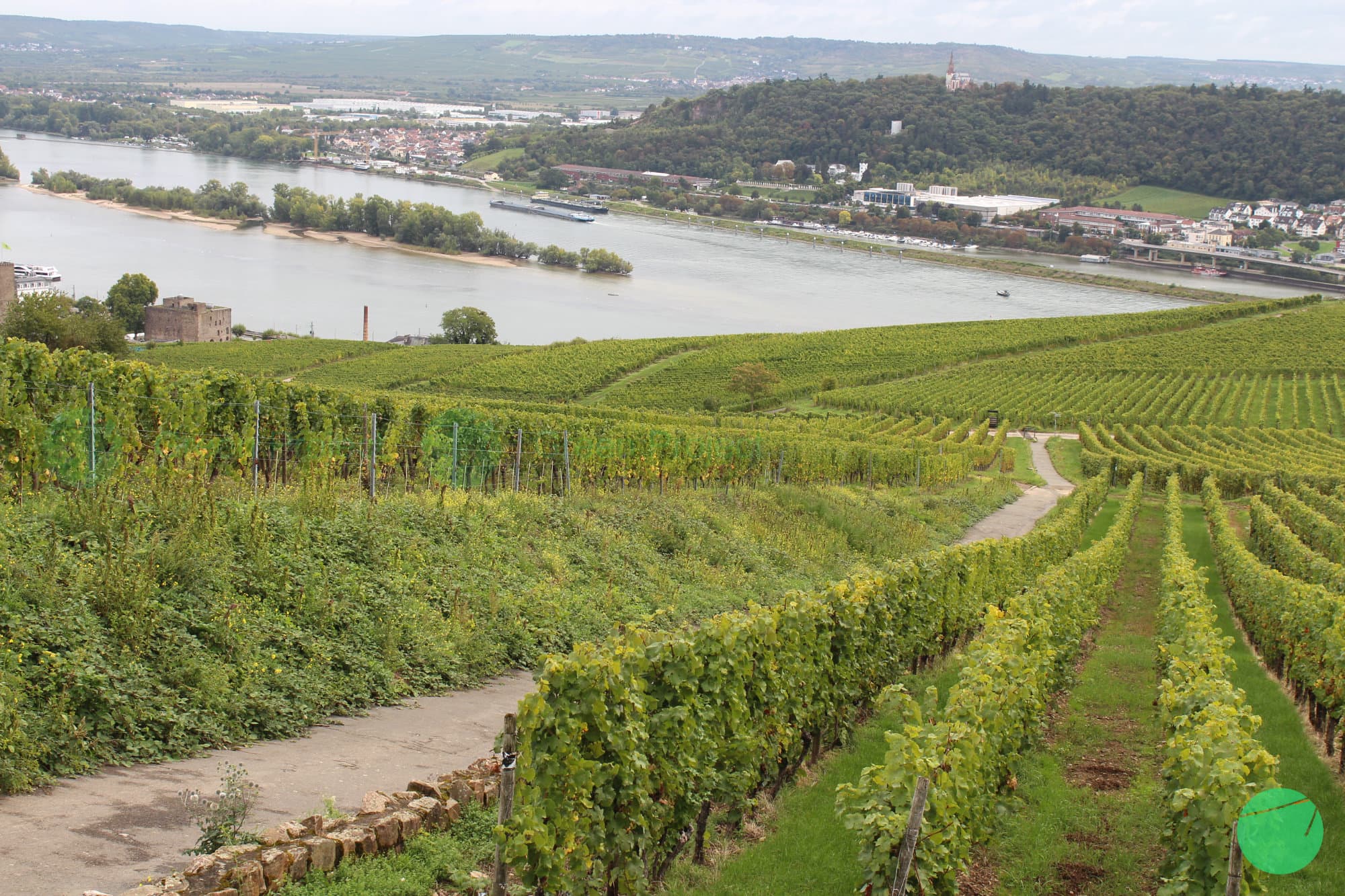
Rüdesheim am Rhein is a small town in Germany located along the Rhine River, widely known as part of the Rhine Gorge, a UNESCO World Heritage Site. Beyond its identity as a tourist destination and wine-producing region, Rüdesheim presents a complex ecological landscape where interactions between human activity and the natural environment have taken place intensively over centuries.
Landscape and Ecological Characteristics
The region of Rüdesheim is dominated by steep slopes cultivated with vineyards. This landscape is not entirely natural, but rather the result of long-term human intervention. Terracing systems were developed as a response to the hilly terrain, allowing viticulture to thrive.
From an ecological perspective, these terraces create unique microhabitats. Stone walls provide living spaces for small organisms such as insects, mosses, and wild plants. This demonstrates that traditional agricultural practices, under certain conditions, can coexist with biodiversity.

The Rhine River as an Ecological System and Trade Route
The Rhine River functions not only as an economic and transportation corridor, but also as an important ecological system. It supports fish species, water birds, and riparian vegetation along its banks.
Historically, the Rhine has also served as one of Europe’s major trade routes, connecting inland regions with major ports. Through these networks, agricultural products such as wine—and later commodities like coffee, sugar, and spices from colonial territories—were transported and distributed. In this sense, landscapes like Rüdesheim can be understood as part of a broader economic system that was eventually linked to global colonial trade.
At the same time, human activities such as shipping, tourism, and infrastructure development continue to place pressure on the river’s ecological balance. Changes in water quality and habitat disruption remain ongoing concerns.
Historical Architecture, Christianity, and Structures of Power
Rüdesheim is also marked by historical buildings closely associated with the Christian tradition in Europe. Churches, monasteries, and religious monuments have shaped the spatial structure of the town since the Middle Ages.
Beyond their spiritual function, these institutions historically played a role in land management and agricultural production, including vineyards. On a broader level, religious networks contributed to shaping social and economic structures that later developed alongside expanding trade systems and colonial expansion.
The materiality of these buildings—particularly stone—also creates micro-ecological conditions, allowing mosses and small plants to grow on their surfaces. This highlights how even constructed, symbolic structures remain embedded within ecological systems.


Agriculture, Tourism, and Traces of Global Systems
Rüdesheim demonstrates how agriculture—especially viticulture—and tourism act as key forces in shaping the landscape. Vineyards define the cultural and economic identity of the region, while tourism drives its contemporary economy.
Within a broader perspective, European agricultural production, including wine, became part of larger global commodity systems that expanded during the colonial era. This illustrates how local agricultural practices can be connected to wider economic networks that extend beyond their immediate geography.
However, intensification of production, pesticide use, and increased tourism also raise environmental concerns, particularly regarding biodiversity and resource use.
Field Observation Notes
Field observations indicate that biodiversity persists most strongly in areas with lower levels of human intervention. Transitional zones—such as terrace edges and less-managed slopes—retain wild vegetation and provide habitats for insects and small birds.
These spaces act as ecological buffers within an otherwise highly managed landscape.
Reflection
Rüdesheim should not be seen solely as a picturesque landscape, but as a site where relationships between humans, nature, and global economic systems are continuously negotiated. It reflects how agriculture, religion, history, and trade collectively shape ecological environments.
Approaching this landscape ecologically allows it to be understood not only as a visual object, but as part of a broader historical network that includes colonial systems and the global circulation of plant commodities.
Through Rüdesheim, we can understand that cultural landscapes are inseparable from ecological and historical dynamics. The interactions between human activity, belief systems, trade, and the environment demonstrate how local spaces are connected to global systems. In this context, landscapes become not only places, but also living archives of the relationship between humans and nature.