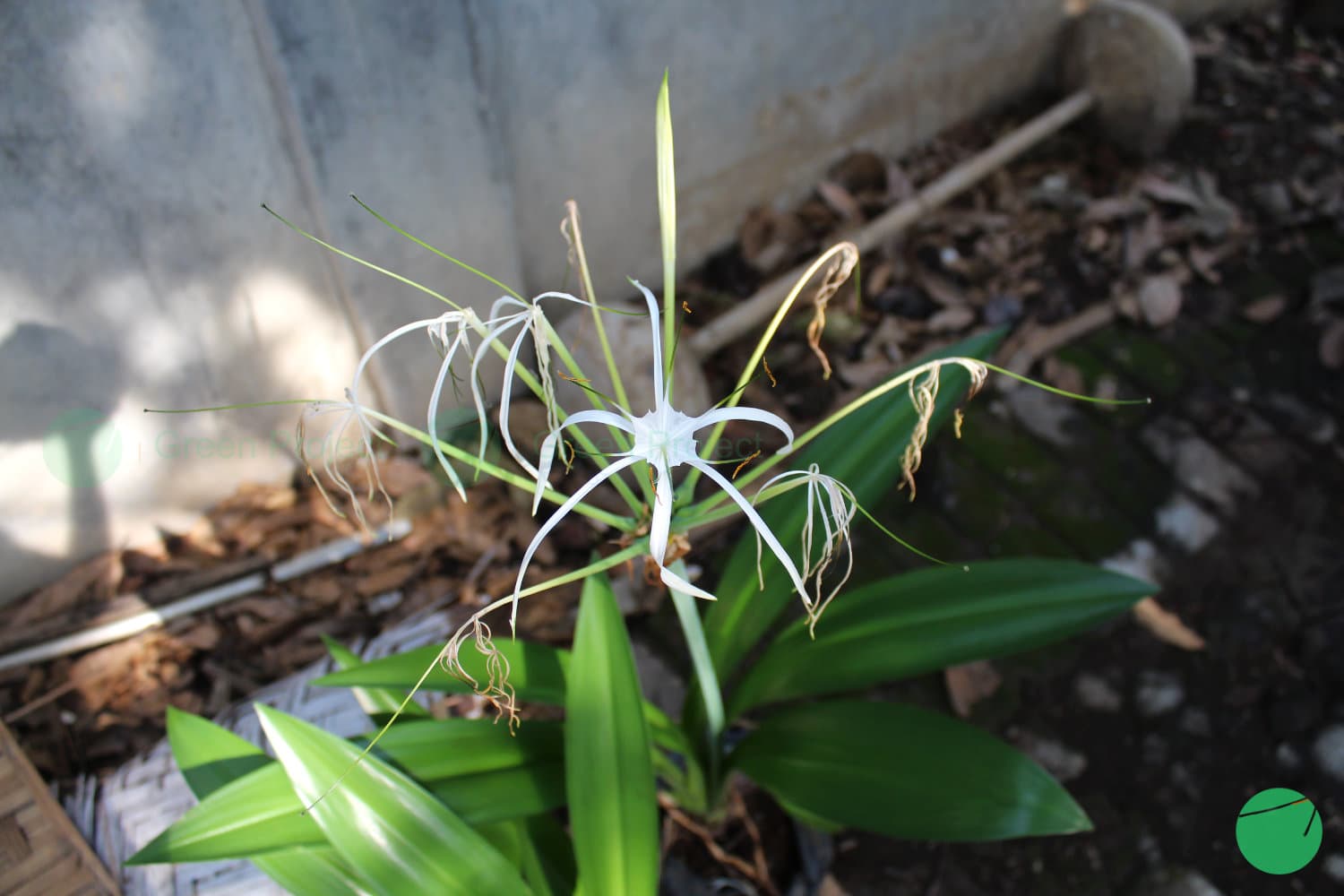
Crape Myrtle (Lagerstroemia indica)

Name
Scientifically, the bungur kecil (small bungur) is known in Latin as Lagerstroemia indica. Internationally, in English, this plant is popularly referred to as "Indian crape myrtle," "crape myrtle," or "crepeflower."
In Indonesia, besides being called bungur kecil, the plant is also popularly known as bungur Jepang (Japanese bungur). In Malaysia, it is known as bongor biru; in India, as ajhar, arjuna, or bondara; in the Philippines, as banaba; and in Thailand, as chuangmuu or tabaek dam.
The genus name, Lagerstroemia, serves as a tribute to Magnus von Lagerstroem (1691–1759)—a Swedish botanist, director of the Swedish East India Company, and friend of Carl Linnaeus. The specific epithet, indica, refers to the region of origin for this plant: India (Lagerstroemia Indica - Plant Finder, 2024).
Taxonomy
| Kingdom | Plantae |
|---|---|
| Phylum | Tracheophyta |
| Class | Magnoliopsida |
| Order | Myrtales |
| Family | Lythraceae |
| Genus | Lagerstroemia |
| Species | Lagerstroemia indica |
Origin
The crape myrtle (Lagerstroemia indica) is native to a region in Asia that includes India, Bangladesh, Bhutan, Cambodia, China, Indonesia, Japan, Laos, Malaysia, Myanmar, Nepal, Pakistan, the Philippines, Sri Lanka, Taiwan, and Vietnam. From Asia, it was subsequently distributed to Europe, Africa, and the Americas as an ornamental plant.
The crape myrtle began to be used as an ornamental plant for garden decoration in Europe and the Americas in 1759. In the Caribbean, according to reports, the plant was first introduced in 1881, specifically on the island of Puerto Rico (Rojas‐Sandoval & Acevedo‐Rodríguez, 2022).

Morphology and Growth
Crape myrtle (Lagerstroemia species) is a shrub or small tree that can reach a height of up to 7 meters, with a broad spread ranging from 4 to 7 meters.
It features thin, light-gray bark marked with dark spots. Its branches are slender, four-angled, and smooth (glabrous).
The leaves are essentially sessile—with petioles only about 2 mm long—and are elliptical to oblong in shape. They are dull green in color and turn orange, red, or yellow before falling, as the plant is deciduous.
The beautiful, eye-catching flowers come in various colors depending on the variety, typically including shades of purple, lavender, pink, red, and white. The individual small blossoms form clusters measuring 30 to 60 cm across.
The fruit consists of hard, oblong, brown capsules. These capsules are approximately 30 cm in size (Find Trees & Learn | University of Arizona Campus Arboretum, 2024).
Crape myrtles thrive best in fertile, loamy soil with moderate moisture and good drainage, under full sun exposure.
Health Benefits and Other Uses of Crape Myrtles (Bungur Kecil)
Lagerstroemia indica (crape myrtle) is commonly used as an ornamental plant to enhance garden aesthetics. Furthermore, due to its dense and wide-spreading root system, this species is also employed for erosion control; consequently, it is frequently planted as a boundary marker or a supportive hedge in gardens and cultivated areas (Rojas‐Sandoval & Acevedo‐Rodríguez, 2022).
Other reports indicate that the crape myrtle aphid—which specifically inhabits this species—can attract a variety of beneficial insects that prey upon it. For this reason, Lagerstroemia indica is often planted in orchards (such as pecan groves) and is widely used in landscapes prone to pest issues. In horticultural settings, it is well-suited for lawns, patios, or even along roadsides (Find Trees & Learn | University of Arizona Campus Arboretum, 2024).
Although primarily valued as an ornamental plant, Lagerstroemia indica also contains several compounds with potential health benefits. These include alkaloids, cardiac glycosides, tannins, saponins, sterols, triterpenes, anthraquinones, reducing compounds, flavonoids, and phenolic glycosides. Research by Ali Esmail Al-Snafi (2019) suggests that Lagerstroemia indica exhibits anti-inflammatory, analgesic, antipyretic, antioxidant, anticancer, antimicrobial, anti-Alzheimer’s, antidiabetic, hepatoprotective, and antithrombin properties.
Additionally, a study by Kim et al. (2022) highlights the potential use of Lagerstroemia indica extract in preventing hair loss and stimulating hair growth.
Location
Bibliography
ACIR Community. (2024). Usda.gov. https://acir.aphis.usda.gov/s/cird-taxon/a0u3d000000FFcCAAW/lagerstroemia-indica
Ali Esmail Al-Snafi. (2019, July 10). A review on Lagerstroemia indica: A potential medicinal plant. ResearchGate; unknown. https://www.researchgate.net/publication/334372244_A_review_on_Lagerstroemia_indica_A_potential_medicinal_plant#:~:text=Lagerstroemia%20indica%20showed%20anti%2Dinflammatory,antidiabetic%2C%20hepatoprotective%20and%20antithrombin%20effects.
Find Trees & Learn | University of Arizona Campus Arboretum. (2024). Arizona.edu. https://apps.cals.arizona.edu/arboretum/taxon.aspx?id=152
Kim, B.-H., Myong Gi Kim, & Bu Young Choi. (2022). Lagerstroemia indica extract regulates human hair dermal papilla cell growth and degeneration via modulation of β‐catenin, Stat6, and TGF‐β signaling pathway. Journal of Cosmetic Dermatology, 21(7), 2763--2773. https://doi.org/10.1111/jocd.15081
Lagerstroemia indica - Plant Finder. (2024). Missouribotanicalgarden.org. https://www.missouribotanicalgarden.org/PlantFinder/PlantFinderDetails.aspx?taxonid=282496