Yellow alamanda (Allamanda cathartica)
Name
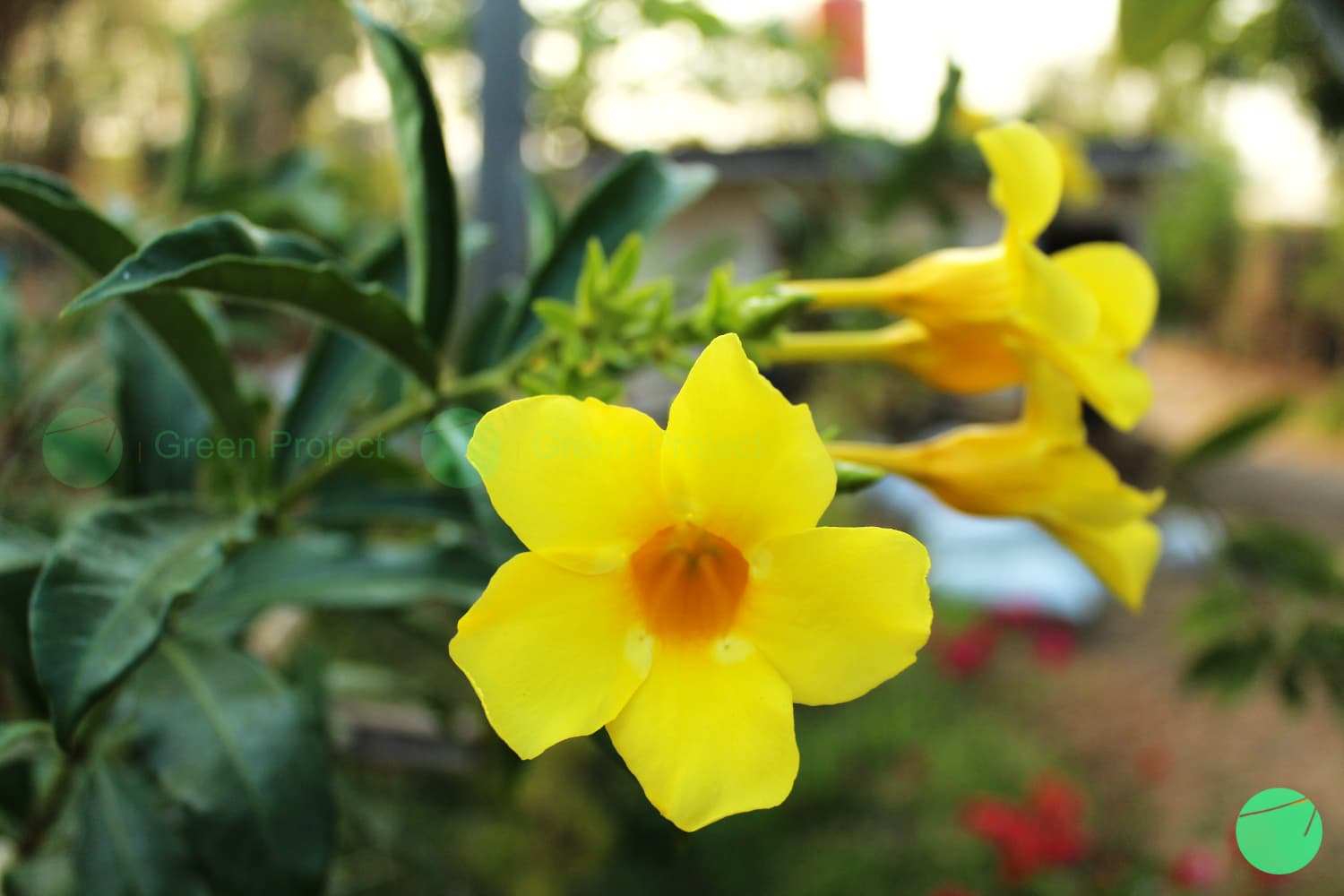
The trumpet flower (Bunga Trompet) is scientifically known in Latin as Allamanda cathartica. In English, it is popularly referred to as "golden trumpet," "common trumpetvine," or "yellow allamanda."
In China, the plant is known as ruan huang chan, while in Spanish-speaking regions, it is more commonly called campana de oro or canario. The genus name Allamanda serves as a tribute to the Swiss botanist Jean Frédéric-François Louis Allamand, who collected seeds in Suriname and sent them to Carl Linnaeus for classification in 1771 (Petricevich & Abarca-Vargas, 2019). Meanwhile, the species name cathartica—implying catharsis or cleansing—refers to its medicinal use for inducing vomiting (NParks | Allamanda Cathartica, 2023).
Taxonomy
| Kingdom | Plantae |
|---|---|
| Phylum | Spermatophyta |
| Class | Magnoliopsida |
| Order | Gentianales |
| Family | Apocynaceae |
| Genus | Allamanda |
| Species | Allamanda cathartica |
Origin
The trumpet flower is believed to have originated in a region of South America that includes Brazil, French Guiana, Guyana, Suriname, and Venezuela (Rojas‐Sandoval & Acevedo‐Rodríguez, 2022).
Today, the trumpet flower is widely distributed and cultivated in many countries with warm, tropical, and subtropical climates—such as those in Australia, Africa, China, Central America, various Pacific islands, and Southeast Asian nations including Indonesia, Malaysia, and Singapore.
Specifically, the species A. cathartica (yellow trumpet flower) and A. blanchetii (pink trumpet flower) are commonly cultivated as ornamental plants and are widely commercialized.
Morphology, Growth, and Invasive Properties
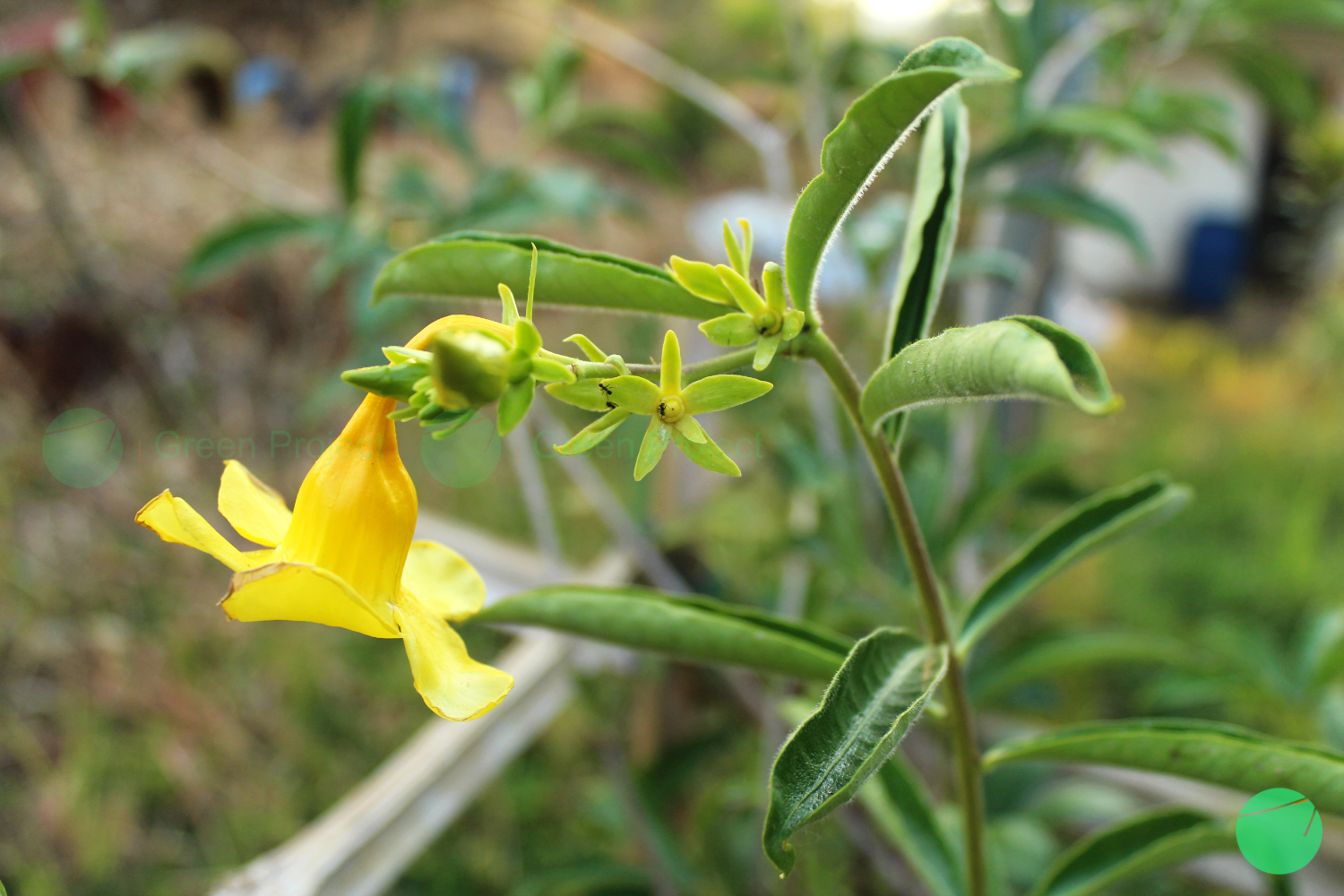
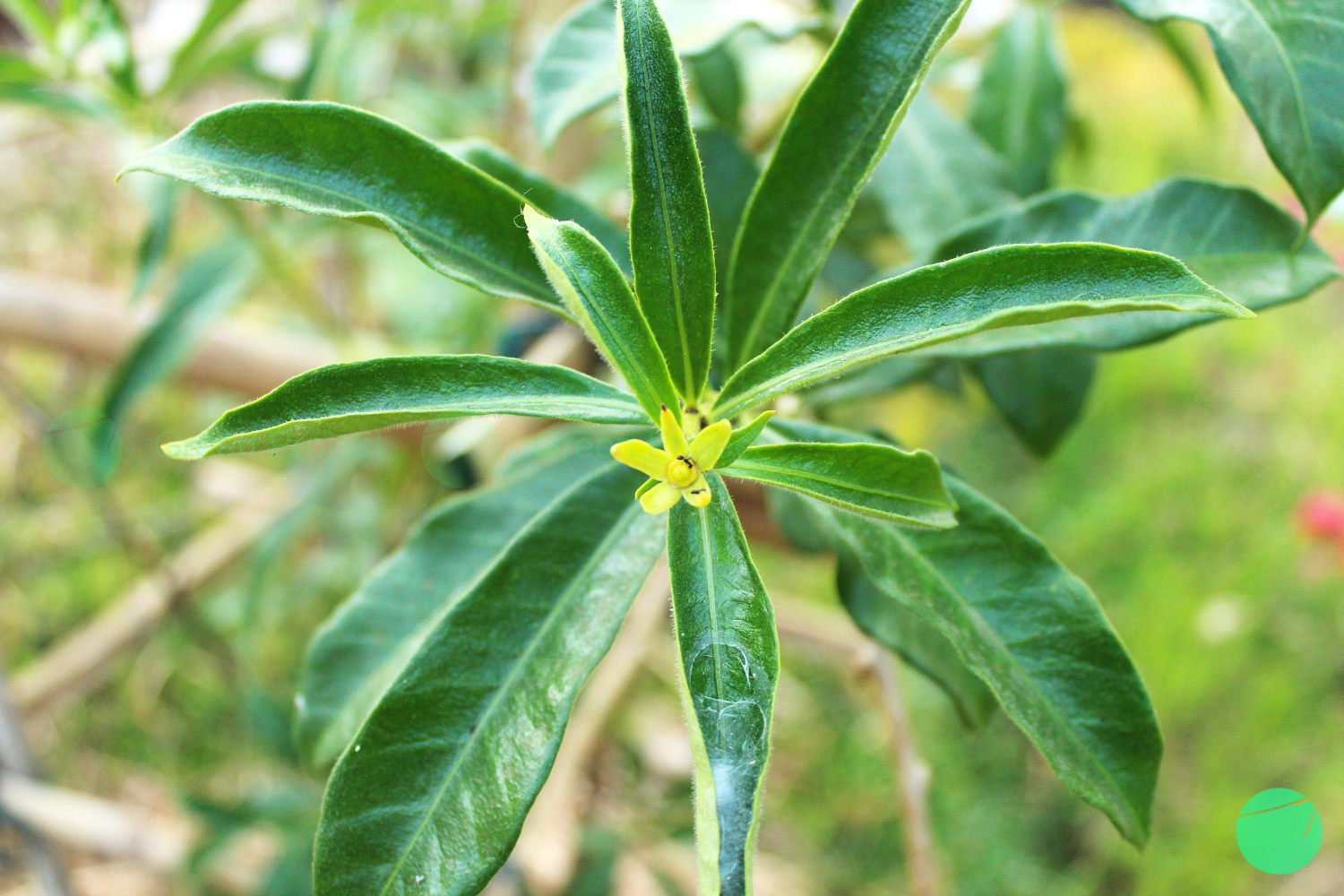
The trumpet flower is an evergreen plant that can reach a height of up to 6 meters. Its stems are woody and contain a milky sap. The leaves, which grow along the stems, have a rough texture and an oblong-lanceolate shape, reaching up to 16 cm in length and 6 cm in width.
The plant produces striking yellow, funnel- or trumpet-shaped flowers that emerge from the leaf axils. The calyx consists of five ovate, spreading sepals, while the corolla is yellow. The fruit is a twisted capsule containing dense, winged seeds.
This plant blooms best in full sunlight. It can be trained to climb using supports such as a trellis or a bamboo fence. Occasional pruning is necessary to improve air circulation, which helps reduce the risk of fungal infections on the leaves (NParks | Allamanda cathartica, 2023).
The species reproduces sexually via seeds and vegetatively through cuttings.
Currently, this species is classified as invasive in China, Guatemala, El Salvador, Honduras, Costa Rica, Nicaragua, Puerto Rico, the Virgin Islands, Samoa, Fiji, and French Polynesia, and is considered an environmental weed in Australia. When invasive, the trumpet flower has the potential to alter native plant communities by outcompeting indigenous understory vegetation (Rojas‐Sandoval & Acevedo‐Rodríguez, 2022)..
Health Benefits and Side Effects of Trumpet Flowers
Its striking flowers have made it a popular ornamental plant. Scientific studies and observations regarding the chemical compounds present in the trumpet flower have been conducted since 1954. A report by Petricevich and Abarca-Vargas (2019) indicates that early chemical analyses revealed the presence of alkaloids, anthraquinones, anthocyanins, carbohydrates, carotenoids, coumarins, flavonoids, glycosides, hydrocarbons, lignins, lipids, phenolic compounds, quinones, saponins, steroids, tannins, and terpenes. These compounds have been identified in various extracts derived from different parts of the plant, particularly the leaves, flowers, stems, bark, roots, and shoots.
Furthermore, research has shown that the trumpet flower possesses significant potential for various medicinal applications, including as an analgesic, anti-inflammatory, antidepressant, antidiabetic, antihyperlipidemic, antifertility, wound-healing, thrombolytic, and laxative agent. It also exhibits activity as an antimicrobial, antimalarial, nematicidal, and antioxidant agent.
Nevertheless, the consumption of the trumpet flower can lead to several adverse side effects. The plant is considered toxic due to the presence of cardiotoxic glycosides. All parts of the plant can cause dermatitis, and the ingestion of large quantities of its leaves or sap has been reported to cause persistent diarrhea. Additionally, skin irritation has been documented, though the specific compounds responsible for this effect have yet to be identified.
Location
Bibliography
ACIR Community. (2023). Usda.gov. https://acir.aphis.usda.gov/s/cird-taxon/a0ut0000000rCIxAAM/allamanda-cathartica
NParks | Allamanda cathartica. (2023). Nparks.gov.sg. https://www.nparks.gov.sg/florafaunaweb/flora/1/3/1303#:~:text=Allamanda%20(Allamanda%20cathartica)%20is%20an,by%20bees%2C%20sunbirds%20and%20butterflies.
Petricevich, V. L., & Abarca-Vargas, R. (2019). Allamanda cathartica: A Review of the Phytochemistry, Pharmacology, Toxicology, and Biotechnology. Molecules, 24(7), 1238--1238. https://doi.org/10.3390/molecules24071238
Rojas‐Sandoval, J., & Acevedo‐Rodríguez, P. (2022). Allamanda cathartica (yellow allamanda). CABI Compendium. https://doi.org/10.1079/cabicompendium.4098