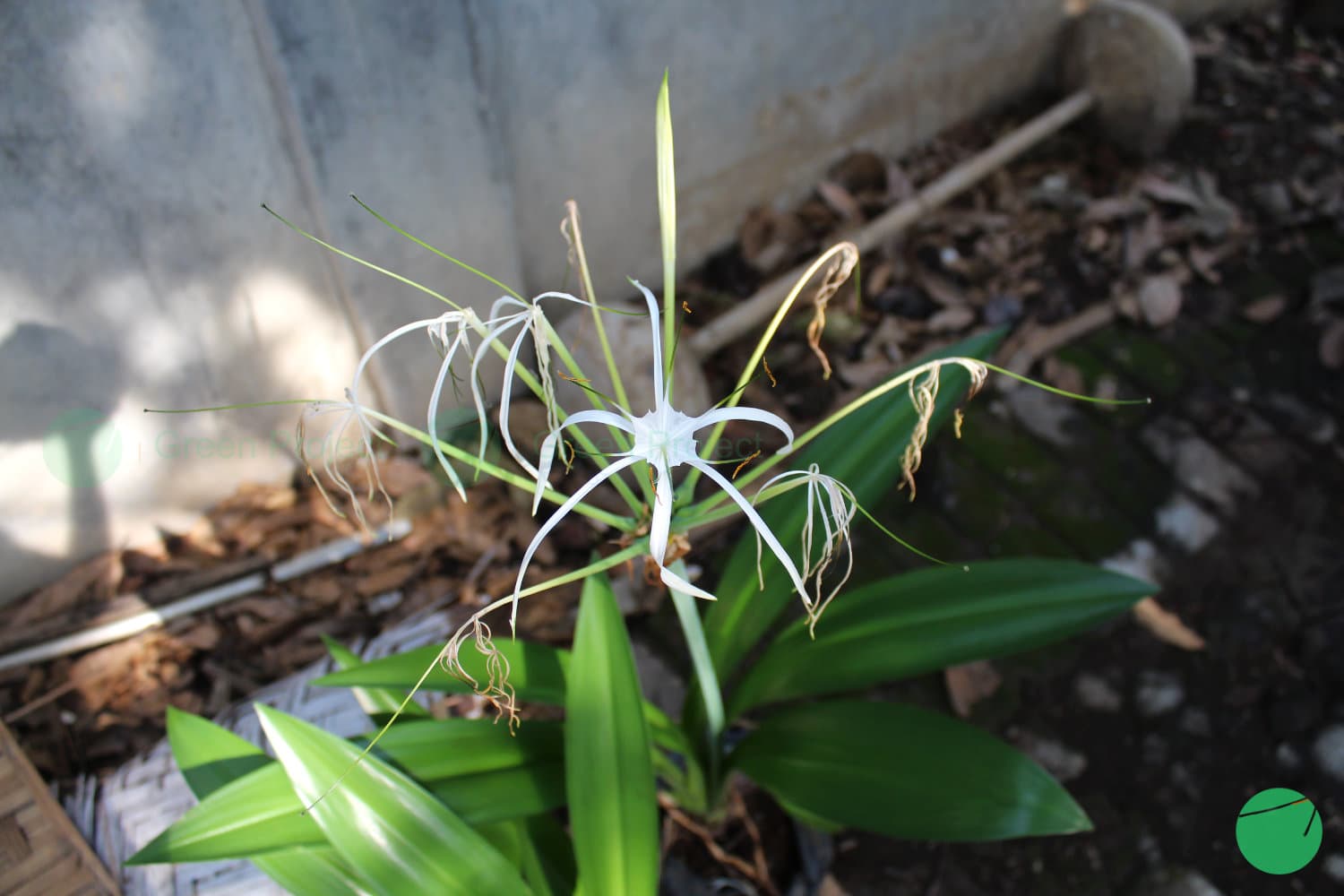
Madagascar Periwinkle (Catharanthus roseus)

Name
Scientifically, the tapak dara plant is known by its Latin name, Catharanthus roseus. In English, it is commonly referred to as Madagascar periwinkle, vinca rosea, or vinca multiflora.
In Indonesia, the plant goes by various names depending on the local language. In Sulawesi, it is known as sindapor, while in West Java, it is called kembang tembaga in Sundanese (Dari, 2007). Meanwhile, in China, the plant is known as chun hua, and in Malaysia, it is referred to as keminting Cina or rumput jalang (Suraduhita, 2017).
Taxonomy
| Kingdom | Plantae |
|---|---|
| Phylum | Tracheophyta |
| Class | Magnoliopsida |
| Order | Gentianales |
| Family | Apocynaceae |
| Genus | Catharanthus |
| Species | Catharanthus roseus |
Origin
As its common name suggests, the tapak dara (Madagascar periwinkle) is a plant endemic to Madagascar. It has become widely distributed across Asia, the Americas, and Africa. However, the plant is considered invasive in certain parts of Kenya (Factsheet - Catharanthus roseus (Madagascar periwinkle), 2023).

Morphology
Madagascar periwinkle is a perennial shrub that can reach a height of approximately 1 to 2 meters. Its stems are round, branched, and segmented, with a green color.
The leaves are simple and grow in an opposite, decussate (cross-paired) arrangement; they are oval-shaped, possess a small tip, and have a glossy surface. The plant produces eye-catching, trumpet-shaped flowers—available in shades of white, pink, or reddish-purple—that emerge from the leaf axils.
This plant requires full sunlight and has a relatively long growth period. Madagascar periwinkle thrives in dry soil conditions; its roots are prone to rot if watered too frequently.
Benefits and Uses of Madagascar Periwinkle
Beyond being cultivated as an ornamental plant for its beautiful flowers, the Madagascar periwinkle (tapak dara) contains various compounds that are beneficial to health. Its leaves are known to harbor more than 70 types of alkaloids, including vincristine and vinblastine. These two compounds are capable of inhibiting the synthesis of purines, DNA, and RNA within cancer cells (Suraduhita, 2017).
While the leaves of the Madagascar periwinkle are commonly used in the treatment of childhood leukemia and Hodgkin's disease, they are considered toxic if consumed by cattle (Library of Arizona Landscape Plants | Martin Virtual Library of Landscape Plants | Landscape Plants for Sustainable Southwest Landscapes, 2023). Furthermore, the plant also serves other practical purposes, such as acting as ground cover or as a border plant in gardens.
Location
Bibliography
ACIR Community. (2023). Usda.gov. https://acir.aphis.usda.gov/s/cird-taxon/a0ut0000000rCJ5AAM/catharanthus-roseus
dari, K. (2007, August 20). Tapak dara. Wikipedia.org; Wikimedia Foundation, Inc. https://id.wikipedia.org/wiki/Tapak_dara
Factsheet - Catharanthus roseus (Madagascar Periwinkle). (2023). Lucidcentral.org. https://keys.lucidcentral.org/keys/v3/eafrinet/weeds/key/weeds/Media/Html/Catharanthus_roseus_(Madagascar_Periwinkle).htm#Origin
FPS112/FP112: Catharanthus roseus Periwinkle, Madagascar Periwinkle, Vinca. (2023). Ufl.edu. https://edis.ifas.ufl.edu/publication/FP112
Library of Arizona Landscape Plants | Martin Virtual Library of Landscape Plants | Landscape Plants for Sustainable Southwest Landscapes. (2023). Asu.edu. https://www.public.asu.edu/~camartin/Martin%20landscape%20plant%20library.htm
Suraduhita, A. (2017). SITOTOKSISITAS EKSTRAK ETANOL DAUN TAPAK DARA (Catharanthus roseus (L.) G. Don.) TERHADAP CELL LINE KANKER SERVIKS (HeLa) DAN CELL LINE KANKER PAYUDARA (MCF-7) - E-Journal Universitas Atma Jaya Yogyakarta. Uajy.ac.id. http://e-journal.uajy.ac.id/11903/1/0BL01379.pdf