Crown Flower (Calotropis gigantea)
Naming Identity
Widuri or Biduri is scientifically known in Latin as Calotropis gigantea. Internationally, this plant is known in English as crown flower or giant milkweed. In India, it is called madar, while in Spanish and French-speaking regions, it is commonly referred to as mudar.
Crown flower has many different local names across regions in Indonesia. For example, it is known as Rubik in Aceh; Biduri, Rembega, and Remingu in Malay-speaking regions; Rumbigo in Minangkabau; Widuri in Sundanese areas; Biduri, Saduri, Sidoguri, and Widuri in Central and East Java; and Bidhuri in Madura. In Bali, it is called Maduri; in the Nusa Tenggara region, it is known as Muduri, Rembiga, Kore, Krokoh, Kolonsusu, Modo Kapauk, and Modo Kampauk; and in Sulawesi, it is referred to as Rambega (Alamendah, 2014).
Taxonomy
| Kingdom | Plantae |
|---|---|
| Phylum | Tracheophyta |
| Class | Magnoliopsida |
| Order | Gentianales |
| Family | Apocynaceae |
| Genus | Calotropis |
| Species | Calotropis gigantea |
Origin
This plant is known to originate from Asia, including Indonesia, Myanmar, the Philippines, Cambodia, Vietnam, Malaysia, Thailand, Sri Lanka, Bangladesh, Pakistan, Nepal, and China.
Morphology, Growth, and Habitat
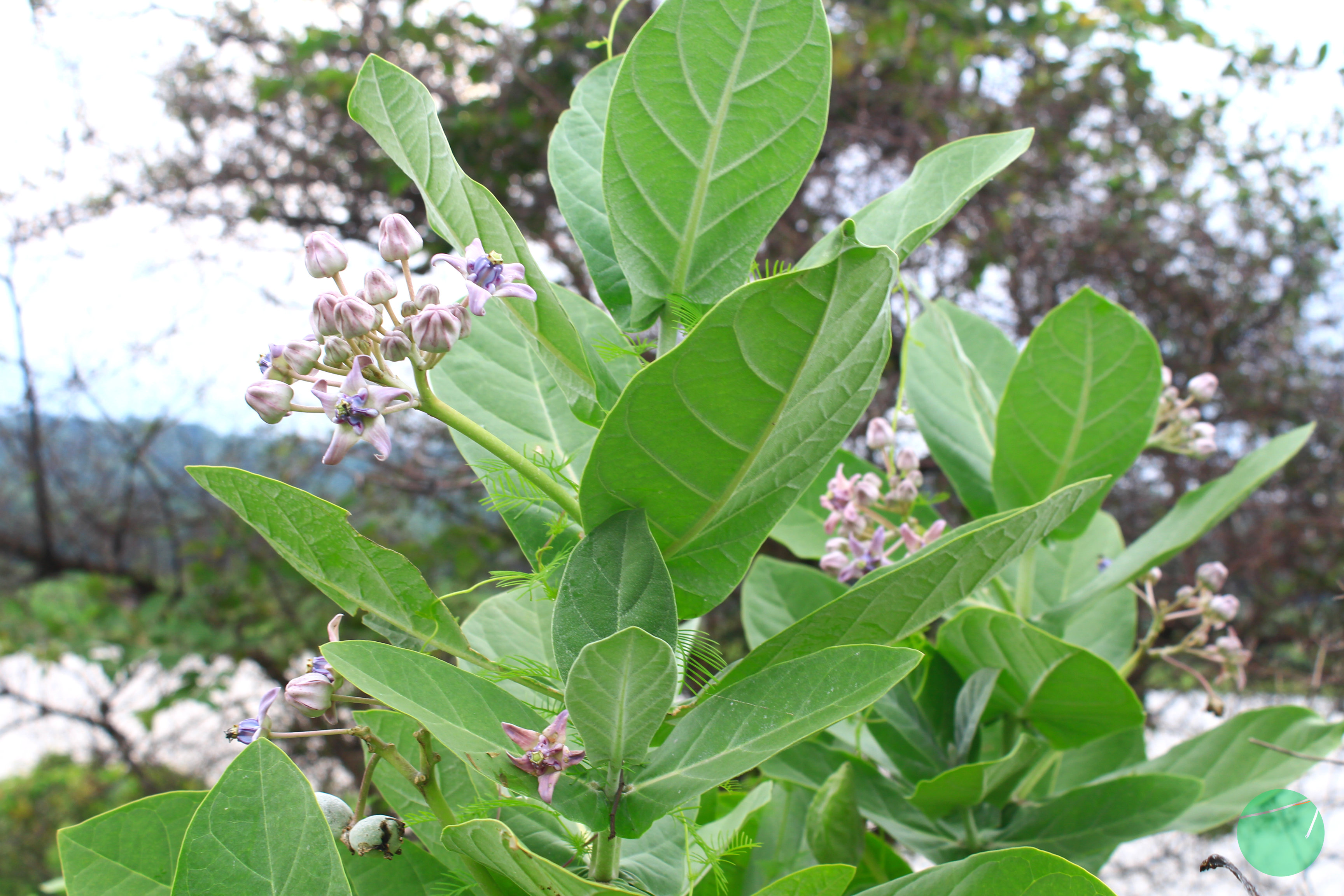
Crown flower is a shrub that can grow up to 4 meters in height. Its stem is upright, branched, cylindrical, solid, and contains milky white latex. The leaves are simple, arranged oppositely, and ovate in shape with blunt tips and indented bases, as well as smooth margins. The leaves are greenish-white in color, measuring 8 to 30 cm in length and 4 to 15 cm in width. They have short petioles and pinnate venation. The upper surface of the leaves is densely hairy when young, with the hairs gradually disappearing as the leaves mature.
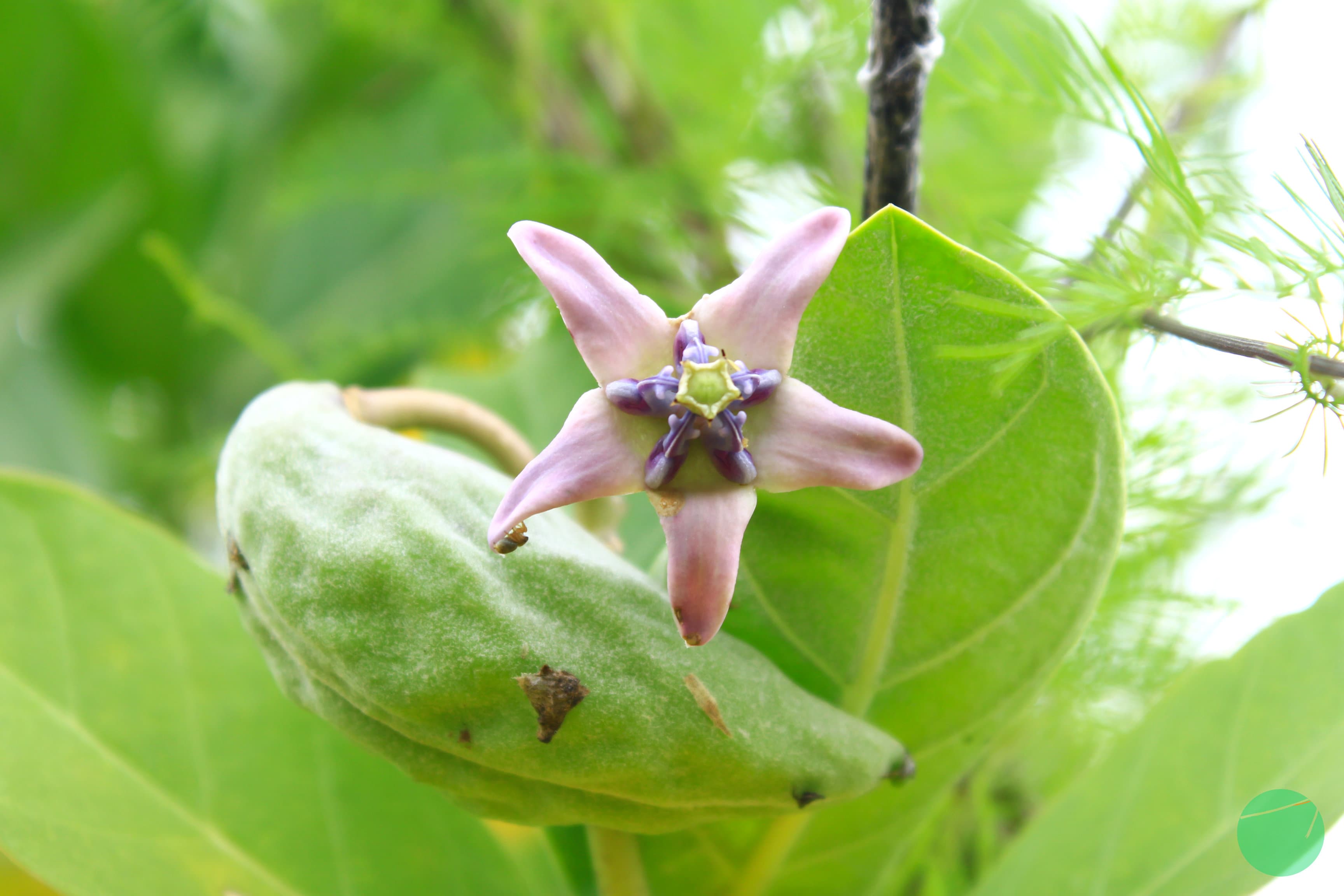
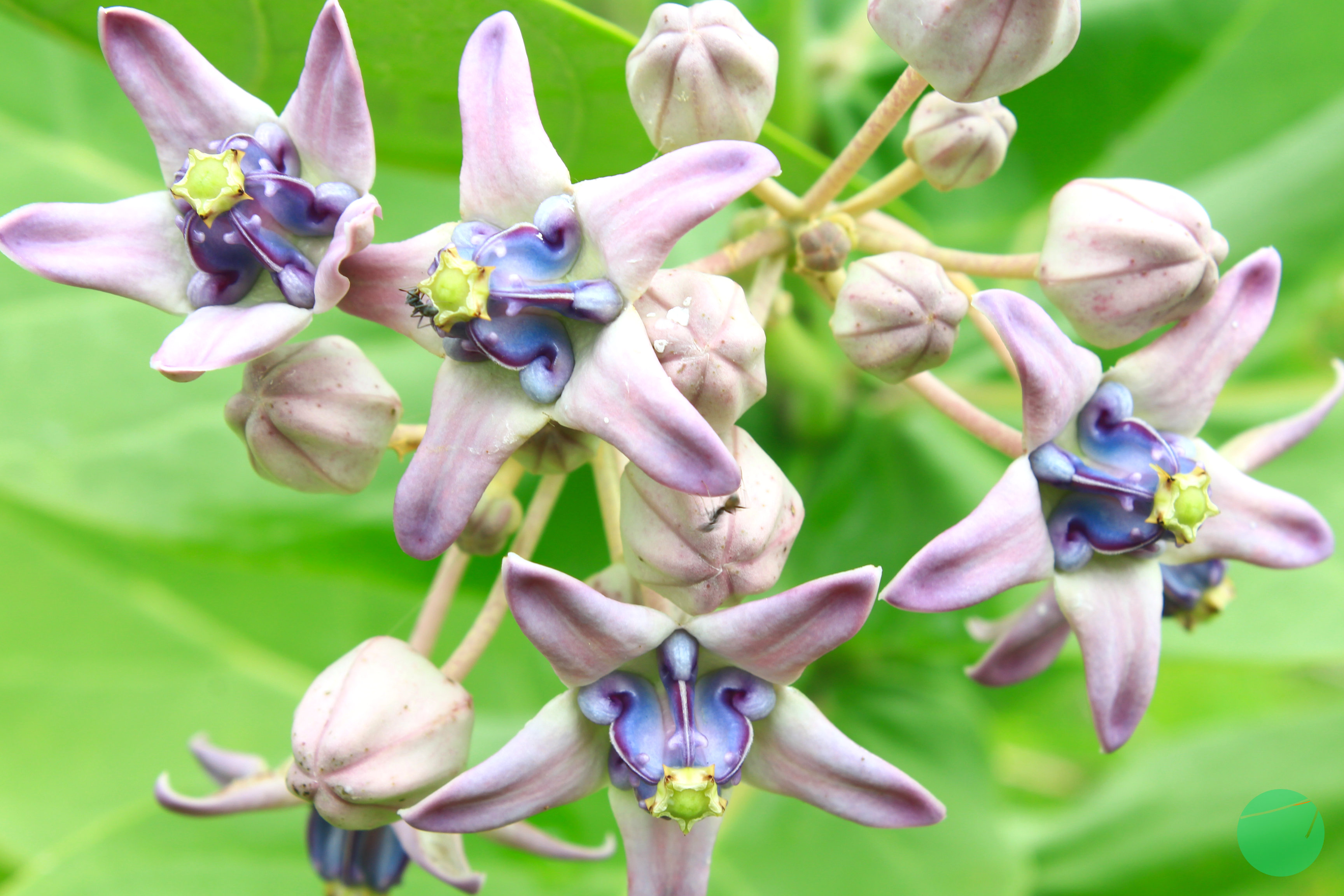
Flowers of the plant are compound and umbrella-shaped, growing at the tips of branches (terminal) or in the leaf axils. The flower stalks are long (3–5 cm), with spread-out sepals that are ovate, finely hairy, and green in color, and they also have narrow bracts. The stamens form a tube, and the stigma is broad and five-angled. The petals are ovate, white or purplish-white, with a diameter of 4–4.5 cm.
The fruit of crown flower is elongated and oval, resembling a pod with a hooked tip and green in color, measuring about 9 to 10 cm in length. The seeds are small, oval, flat, brown, and covered with short, dense hairs. They have silky tufts, allowing them to be dispersed by the wind. Widuri can be propagated by seeds.
In Indonesia, this plant is commonly found growing wild, especially in the Cirebon area of West Java, particularly around Setu Patok Lake, Ciperna, Harjamukti District, and nearby residential areas.
Benefits and Medicinal Properties of Crown flower for Health
In many cultures and traditions, this plant is known to have numerous uses and medicinal properties. Among them are its applications in treating various disorders related to the central nervous system, skin diseases, the digestive system, the respiratory system, and the reproductive system.
Indigenous communities incorporate this plant into their daily lives by using the fibers of its fruit to make ropes, household tools, and woven clothing. Meanwhile, its flowers are used for decorative floral arrangements.
Most uses of crown flower have also been validated by scientific studies, including its roles as an analgesic, anti-rheumatic, anti-asthmatic, antibacterial, anticonvulsant, antipyretic, treatment for central nervous system disorders, contraceptive, anti-ulcer agent, and wound-healing remedy (Kadiyala et al., 2013). In addition, other studies have reported its potential as an antidiabetic, antidiarrheal, anthelmintic, antihistamine, anti-inflammatory, antimicrobial, antioxidant, cardioprotective agent, as well as its cytotoxic, hepatoprotective, fibrinolytic, mosquito-repellent, neuromuscular activity, vasodilatory, and skeletal muscle activity effects.
Crown flower as a Poisonous Plant
On the other hand, the crown flower plant is also said to be poisonous, as several parts of the plant contain toxins and can cause side effects if consumed by humans. Crown flower, or Caloptris, can be described as an acute poison that can cause death. When cut, crushed, or sliced, its stems, branches, and leaves produce a milky white latex, a sour juice called sari madar by local Indian communities.
Primitive humans, through observation, learned that animals intuitively avoid certain plants. This knowledge then led to faster and easier hunting methods for early humans. They would smear the tips of arrows with the juice of poisonous plants, including the Caloptris species, to kill animals more easily (Anil Aggrawal, 2005).
In a published article, Gupta (2018) stated that the parts of the crown flower considered poisonous include the stems, branches, leaves, and the milky white sap (sari madar). The main toxic substances in this plant are uscharin, calotoxin, calotropin, and gigantin.
Local toxic symptoms of crown flower include the appearance of bruise-like lesions on the skin (which can then be referred to as factitious injuries), which can sometimes lead to the formation of pustules and vesicles. If the juice gets into the eyes or comes into contact with them, it can cause severe conjunctivitis.
Systematically, through its bitter taste, this plant can cause a burning sensation in the throat, salivation, nausea, vomiting, and other symptoms, followed by diarrhea, abdominal pain, mydriasis, tetanic convulsions, delirium, collapse, and death.
Location
Bibliography
ACIR Community. (2023). Usda.gov. https://acir.aphis.usda.gov/s/cird-taxon/a0u3d000000FFHlAAO/calotropis-gigantea
Alamendah, L. S. P. D. (2014, October 22). Biduri atau Widuri (Calotropis gigantea) yang Terabai. Alamendah's Blog. https://alamendah.org/2014/10/22/biduri-atau-widuri-calotropis-gigantea-yang-terabai/
Anil Aggrawal. (2005). HISTORY OF TOXICOLOGY. Elsevier EBooks. https://doi.org/10.1016/b0-12-369399-3/00193-2
Gupta, P. (2018). Poisonous plants. Elsevier EBooks, 309--329. https://doi.org/10.1016/b978-0-12-813213-5.00011-0
Kadiyala, M., Sivasankaran Ponnusankar, & K Elango. (2013). Calotropis gigantiea (L.) R. Br (Apocynaceae): A phytochemical and pharmacological review. Journal of Ethnopharmacology, 150(1), 32--50. https://doi.org/10.1016/j.jep.2013.08.045