Marvel of Peru (Mirabilis jalapa)
Naming Identity
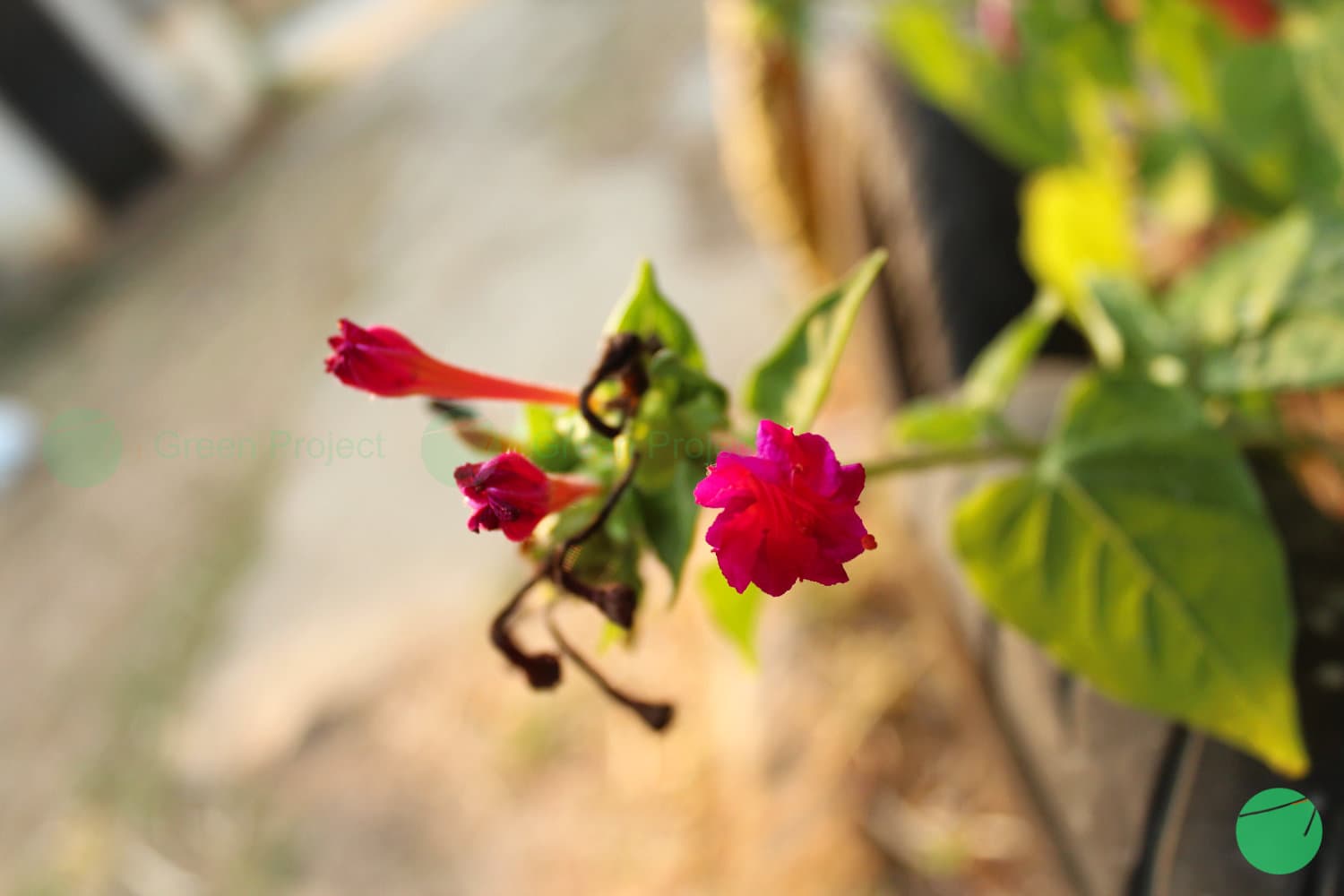
The four o'clock flower is scientifically known as Mirabilis jalapa in Latin. Internationally, this plant is known as the marvel of Peru, Four-o-clock, or false jalap.
The genus name, Mirabilis, comes from the Latin for "amazing," and was chosen by Carl Linnaeus in 1753. The specific name, Xalapa, is the name of the capital of the Mexican coastal state of Veracruz (Mirabilis Jalapa - Northwest Horticultural Society, 2022). The city has become known as the "city of flowers" primarily because of its ideal growing climate. It is also where the jalapeño pepper originated.
The popular name, four-o-clock, refers to a legend that says the plant is best viewed at four o'clock in the afternoon, when its flowers typically bloom (J Vélez-Gavilán, 2022).
Taxonomy
| Kingdom | Plantae |
|---|---|
| Phylum | Tracheophyta |
| Class | Magnoliopsida |
| Order | Caryophyllales |
| Family | Nyctaginaceae |
| Genus | Mirabilis |
| Species | Mirabilis jalapa |
Origin
Some research sources believe this plant originated in the Peruvian Andes. This assertion is further supported by its naming by Carl Linnaeus in 1753, its popular name as the marvel of Peru, and the fact that this species was exported from that region to Europe in the 1500s.*
However, other research suggests that this plant likely originated in Mexico, as recorded in the chronicles of the conquest of Mexico and growing in Aztec gardens before 1521 (J Vélez-Gavilán, 2022).
Morphology
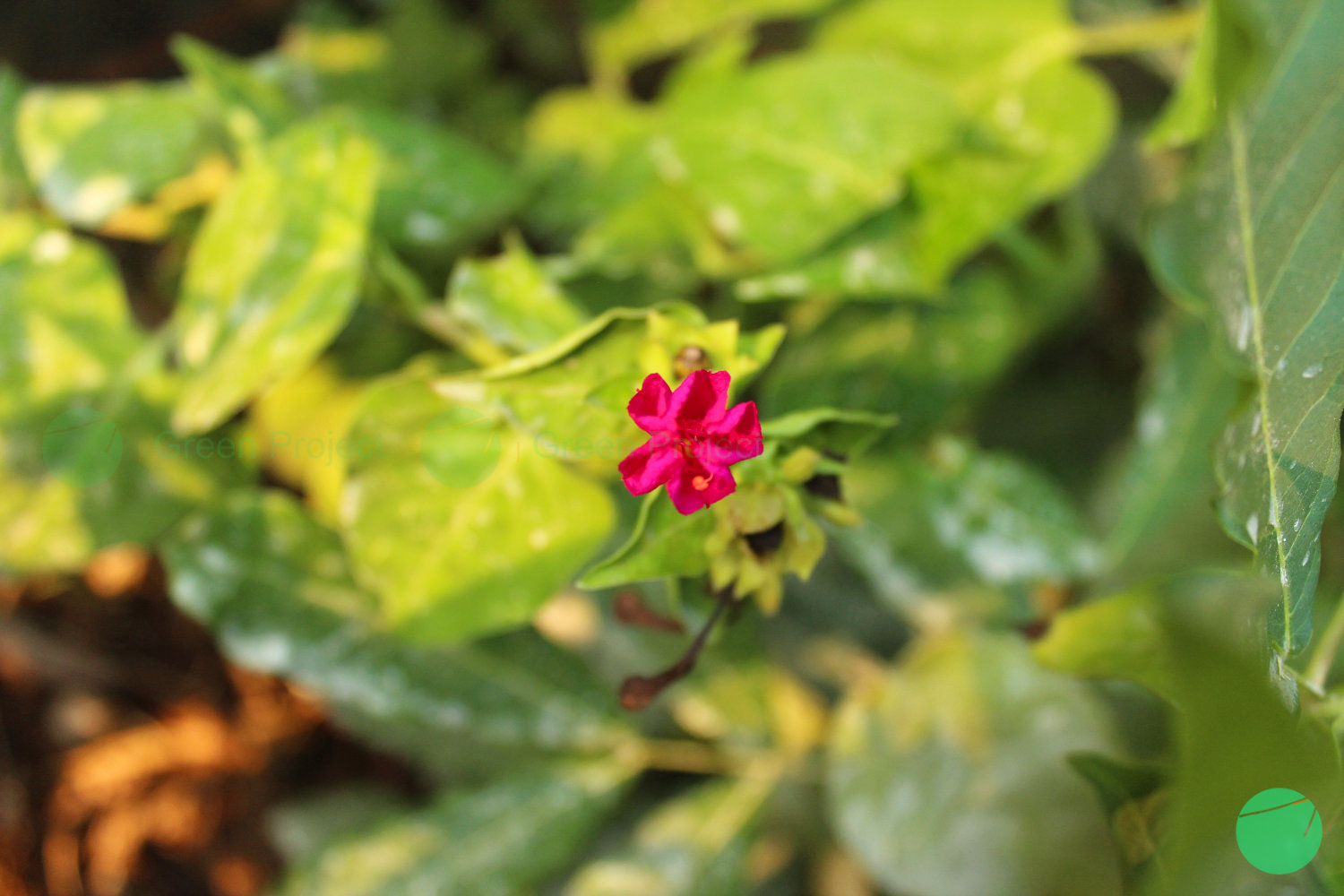
The four o'clock flower is an annual tuberous herbaceous plant that can grow up to 1 meter tall. This plant's distinctive feature is its trumpet-shaped flowers, which come in a variety of colors: white, yellow, or red. The flowers are lemon-scented and bloom in the afternoon, according to legend, at four o'clock in the afternoon and remain open until the next morning.
The flowers are arranged in clusters of 3 to 7 and are up to 5 cm long. The oval and triangular leaves are arranged opposite each other.
The fruit is dry, nearly spherical, with a wrinkled surface. It is dark brown to black in color and measures 7-9 mm wide.
The stem is upright, with numerous branches and is cylindrical in shape. Its surface is glabrous or slightly pubescent.
Invasive Nature
The four o'clock flower is not known to have the potential to become a weed. However, it can escape from gardens into nearby areas and naturalize in disturbed areas.
This plant has been declared an invasive plant in Asia, including Indonesia, China, the Maldives, and the Philippines, as well as in Africa, South America, and Oceania.
Benefits of Four O'Clock Flowers for Health and Other Uses
The four o'clock flower is a tuberous herbaceous plant that has been grown as an annual ornamental plant since the 1500s. Its popularity is now said to be declining in some countries.
Besides its ornamental use, the four o'clock flower is also used as a cosmetic powder, beads, magical amulets, and as a dark red dye. In India, the leaves are mixed with ground garlic and fed to chickens, believing the mixture will increase egg production (J Vélez-Gavilán, 2022).
In China, the roots are used in traditional medicine as a laxative. The juice extracted from the leaves is applied to wounds, while the decoction is applied to abscesses (NParks | Mirabilis Jalapa, 2024).
The decoction of the four o'clock flower has also been used as an anti-inflammatory in traditional medicine. This use is further supported by research conducted by Hidayatul Ihsan et al. (2021) found that the four o'clock flower has potential as an anti-inflammatory drug by stabilizing red blood cell membranes.
Although it has been used in various traditional medicines, the four o'clock flower, especially its seeds, is highly toxic and should not be ingested.
The four o'clock flower has also been shown to have potential for soil bioremediation in areas contaminated with heavy metals such as cadmium (J Vélez-Gavilán, 2022).
Location
Bibliography
ACIR Community. (2024). Usda.gov. https://acir.aphis.usda.gov/s/cird-taxon/a0ut0000000rC8eAAE/mirabilis-jalapa
Hidayatul Ihsan, Iman Surya Pratama, & Nisa Isnaeni Hanifa. (2021). UJI AKTIVITAS ANTIINFLAMASI INFUSA BUNGA PUKUL EMPAT SECARA IN VITRO. Acta Pharmaciae Indonesia, 9(1), 21--21. https://doi.org/10.20884/1.api.2021.9.1.3683
J Vélez-Gavilán. (2022). Mirabilis jalapa (four o'clock flower). CABI Compendium. https://doi.org/10.1079/cabicompendium.34254
Mirabilis jalapa - Northwest Horticultural Society. (2022, June 8). Northwest Horticultural Society. https://northwesthort.org/horticulture/mirabilis-jalapa/
NParks | Mirabilis jalapa. (2024). Nparks.gov.sg. https://www.nparks.gov.sg/florafaunaweb/flora/2/2/2227