Pink Morning Glory (Ipomoea carnea subsp. fistulosa)
Name
In Indonesia, Ipomoea carnea subsp. fistulosa is better known as Kangkung Pagar or Krangkungan. Internationally, it is known as the pink morning glory.
The genus name 'Ipomoea' is derived from the Greek words 'ips', meaning "worm," and 'homoios', meaning "similar" or "like"— a reference to the plant's creeping growth habit. The species epithet 'carnea' comes from Latin and means "flesh-colored," referring to the plant's pale pink flowers. The subspecies name 'fistulosa'—meaning "hollow like a pipe" yet closed at both ends—refers to the plant's hollow stems (National Parks Board, "Ipomoea Carnea Subsp. Fistulosa").
Taxonomy
| Kingdom | Plantae |
|---|---|
| Phylum | Tracheophyta |
| Class | Magnoliopsida |
| Order | Solanales |
| Family | Convolvulaceae |
| Genus | Ipomoea |
| Species | Ipomoea carnea |
Origin
Krangkungan originates from the tropical regions of South America, including countries such as Bolivia, Argentina, Brazil, Colombia, Costa Rica, Guyana, Mexico, and Guatemala. From South America, the plant subsequently spread to many parts of Asia, including Indonesia, Singapore, and India.
Morphology and Growth
Krangkungan is an evergreen plant that remains green and blooms throughout the year, typically growing wild along the edges of rice fields or rivers.
Often planted as a hedge, krangkungan has the ability to form dense thickets and displace native plant species. The shrub is toxic, as it contains several alkaloids.
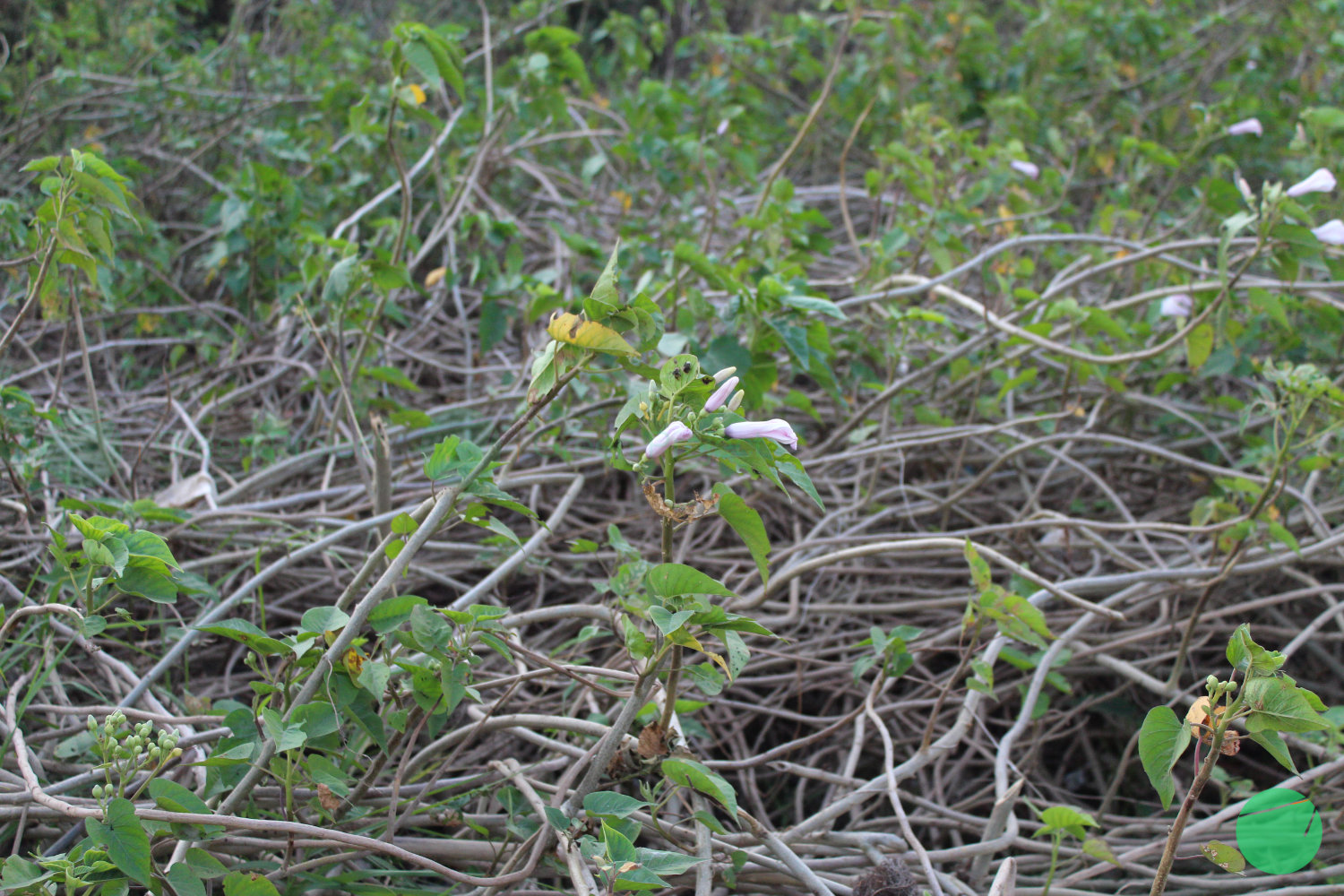
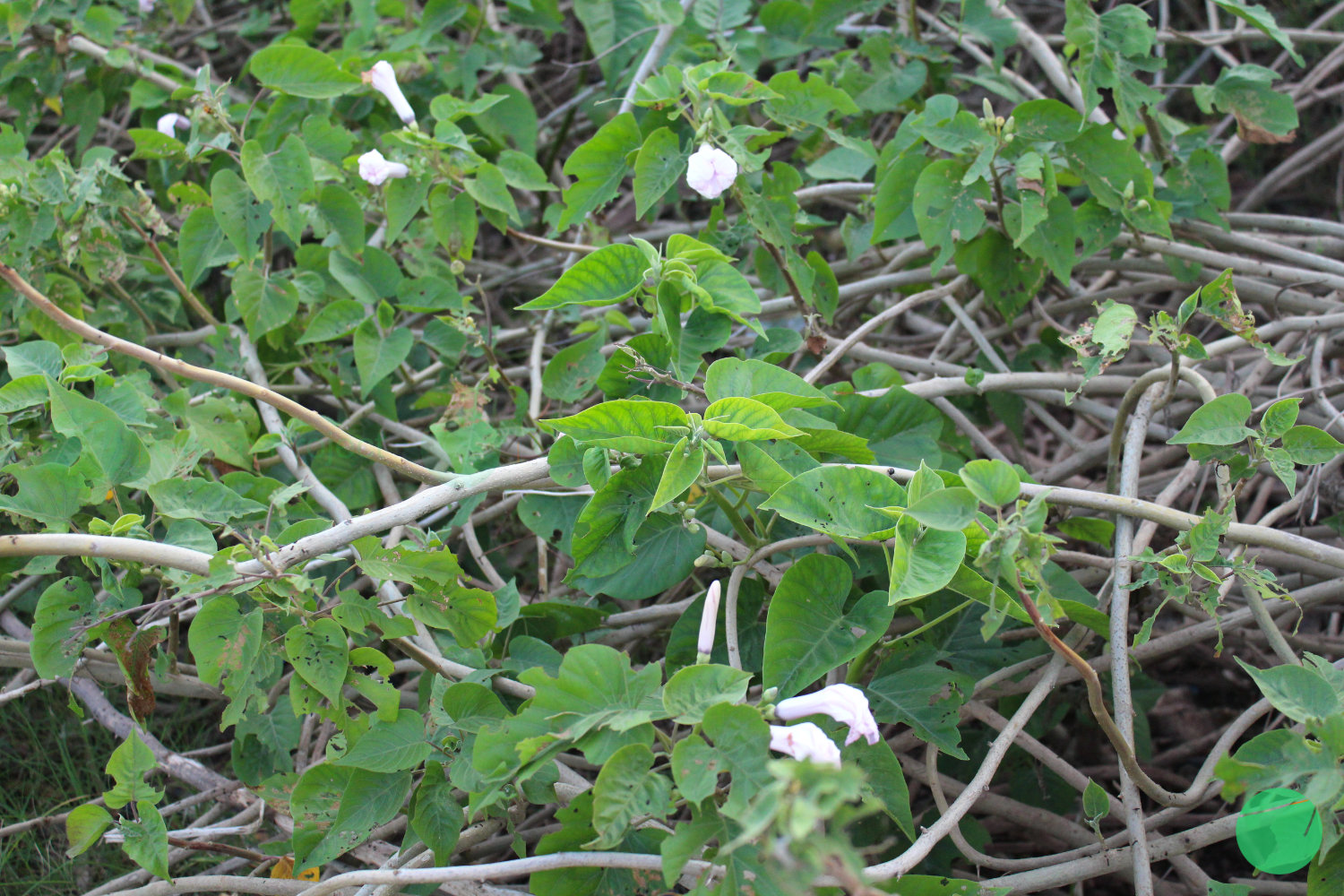
Krangkungan can grow to a height of 1 meter, featuring dense, creeping stems. The stems are woody, ranging in color from light brown to a creamy hue; they are hollow, slender, smooth, and lack any rough texture.
The leaves are green and heart-shaped—tapering toward the apex—with a length of approximately 10 to 25 cm. The petioles (leaf stalks) can reach 4.2 to 6.2 cm in length.
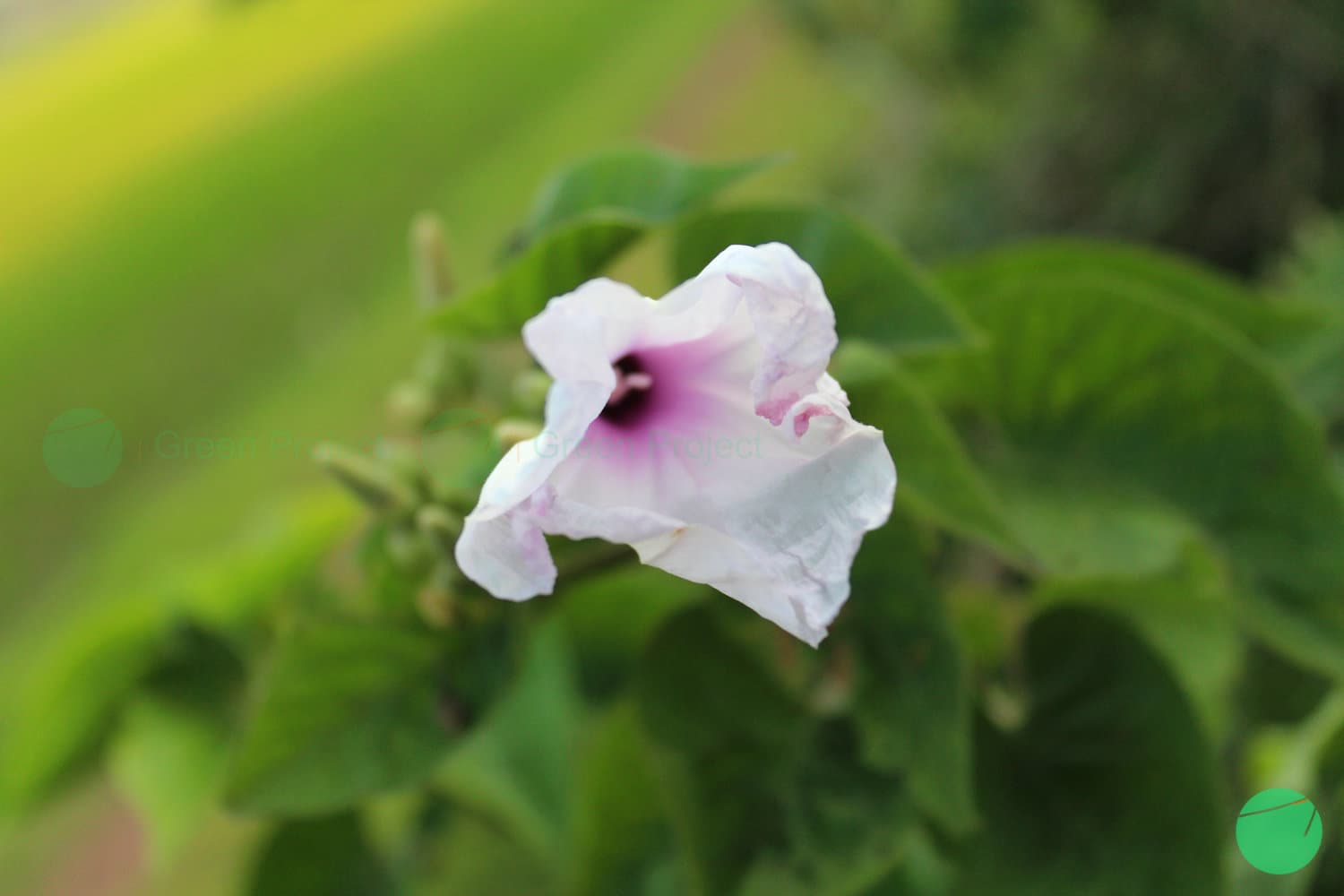
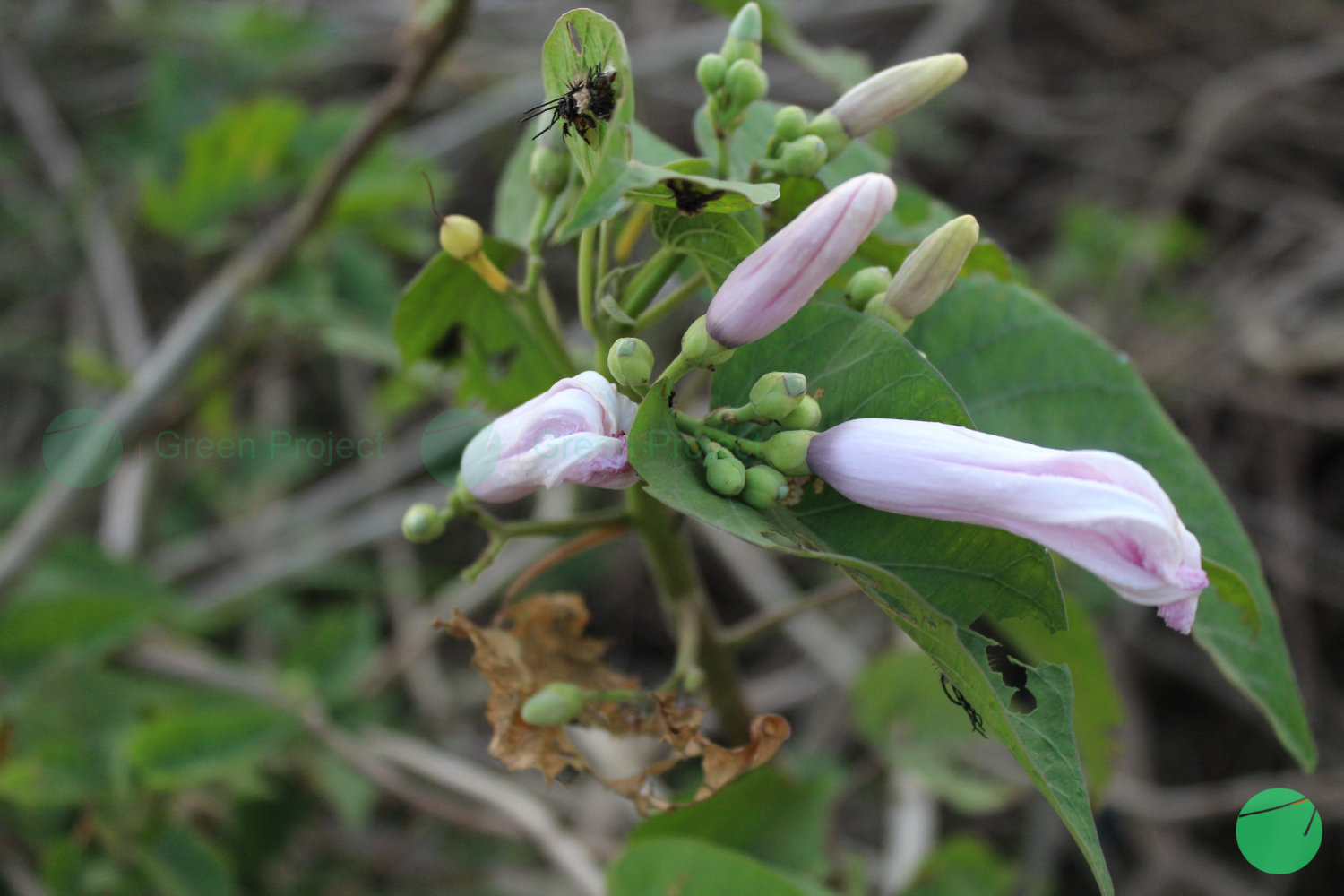
The striking, trumpet-shaped flowers have a smooth surface. Their coloration is a gradient blending white with a pale, purplish-pink. Each flower measures about 5 to 9 cm in length, with a diameter of up to 11 cm, and they tend to grow in clusters at the ends of the branches. The flower stalks are 0.5 to 1.5 cm long and cylindrical. The calyx is approximately 5 to 6 mm long, while the corolla (petals) can reach 4 to 8 cm in length.
Health Benefits and Other Uses
Krangkungan has traditionally been used to treat skin conditions and can also act as a laxative, particularly when its roots are boiled. Its milky sap is applied externally to treat the skin condition leucoderma, while its stems can be used to manufacture paper (National Parks Board, "Ipomoea Carnea Subsp. Fistulosa").
This plant is also said to be highly resistant and resilient against various chemical and biological control methods. Due to its toxicity and exceptionally rapid growth, numerous attempts have been made to find a practical use for it. While most of these efforts have relied on costly methods and operated only on a small scale, a more recent initiative—exploring its potential for biogas production—appears quite promising (India Biodiversity Portal).
Location
Bibliography
---. "Ipomoea Carnea Subsp. Fistulosa." Flora & Fauna Web, 10 Aug. 2022, www.nparks.gov.sg/florafaunaweb/flora/1/4/1429. Accessed 6 Aug. 2023.
India Biodiversity Portal. "Ipomoea Carnea | Species." India Biodiversity Portal, indiabiodiversity.org/group/spotting_alien_invasive_species/species/show/230038#uses. Accessed 6 Aug. 2023.
U.S. DEPARTMENT OF AGRICULTURE. "Ipomoea Carnea." Animal and Plant Health Inspection Services, acir.aphis.usda.gov/s/cird-taxon/a0u3d000000UQJBAA4/ipomoea-carnea. Accessed 6 Aug. 2023.