Frangipani (Plumeria)
Name
Scientifically, the kamboja (plumeria) is known by the Latin name Plumeria. Plumeria is a genus comprising many species distributed across various parts of the world. Internationally, in English, this plant is known as frangipani.
Naming History
The name Plumeria is derived from Charles Plumier (1646–1703)—a student of Joseph Pitton de Tournefort (1656–1708)—in recognition of his dedication as a royal botanist who pioneered the exploration of flora in the tropical regions of the New World during the reign of Louis XIV in France (Zumbroich, 2013). Carl Linnaeus later retained the genus name Plumeria when he cataloged three distinct species—Plumeria rubra L., Plumeria alba L., and Plumeria obtusa L.—in 1753.
Meanwhile, the name "frangipani" originates from a 16th-century Italian nobleman who created a perfume based on the scent of these flowers (Mahr, 2023).
Taxonomy
| Kingdom | Plantae |
|---|---|
| Phylum | Tracheophyta |
| Class | Magnoliopsida |
| Order | Gentianales |
| Family | Apocynaceae |
| Genus | Plumeria |
| Species | Plumeria rubra |
| Plumeria obtusa L. | |
| Plumeria alba L. | |
| (Genus Plumeria memiliki banyak jenis spesies lainnya dengan lebih dari sekitar 100 nama sinonim) |
Origin
This species is considered endemic to the Neotropical realm (encompassing Mexico, Central America, the Caribbean, as well as regions extending to southern Brazil and northern Florida in the United States).
From the Neotropics, the plant spread and became widely naturalized across Southeast and South Asia—including Indonesia, Malaysia, Singapore, Laos, and India.
It remains unclear exactly when the frangipani tree was introduced and naturalized in Indonesia, though its historical presence can likely be traced back centuries. This is evidenced, in part, by depictions of the plant found in the reliefs of Indonesian temples, such as those at Borobudur in Central Java, which was constructed in 778 AD.
The History of Frangipani as a Symbol
Frangipani trees are commonly found in tropical regions and serve as the national flower of Laos. In Indonesia, they are frequently encountered in the vicinity of cemeteries and around Hindu and Buddhist temples. In Bali, in particular, frangipani trees are widely planted around temples and throughout village spaces.
Frangipani trees also appear in the reliefs of Indonesian temples as part of the depicted flora. Notable examples include the Borobudur temple (built in 778 CE in Central Java), the Mendut temple (built in 824 CE in Central Java), and the Panataran temple (constructed in the 12th century CE in East Java).
Within the pantheon of the Maya civilization, the frangipani plant was associated with deities representing life force and fertility; consequently, the flower became closely linked to various expressions of female sexuality. Among the Nahuatl-speaking peoples of central Mexico—most notably during the height of the Aztec Empire—the frangipani was primarily a marker of elite status. It was cultivated in the gardens of the nobility, exchanged as floral offerings during feasts, and depicted in carvings on ceramics and within codices.
In the context of the hybridized religious systems that emerged following the introduction of Christianity across Mesoamerica, the frangipani took on new meanings—for instance, serving as an elaborate decoration in the veneration of the Virgin Mary. Later, when the plant spread from the Americas to Southeast Asia in the 16th century—likely via the Spanish, who brought it to the Philippines—it became more broadly associated with cemeteries, where it was believed to facilitate a connection with the deceased (Zumbroich, 2013).
Morphology
In Southeast Asia—particularly in Indonesia—frangipani trees are commonly found in the vicinity of cemeteries and around Hindu and Buddhist temples.
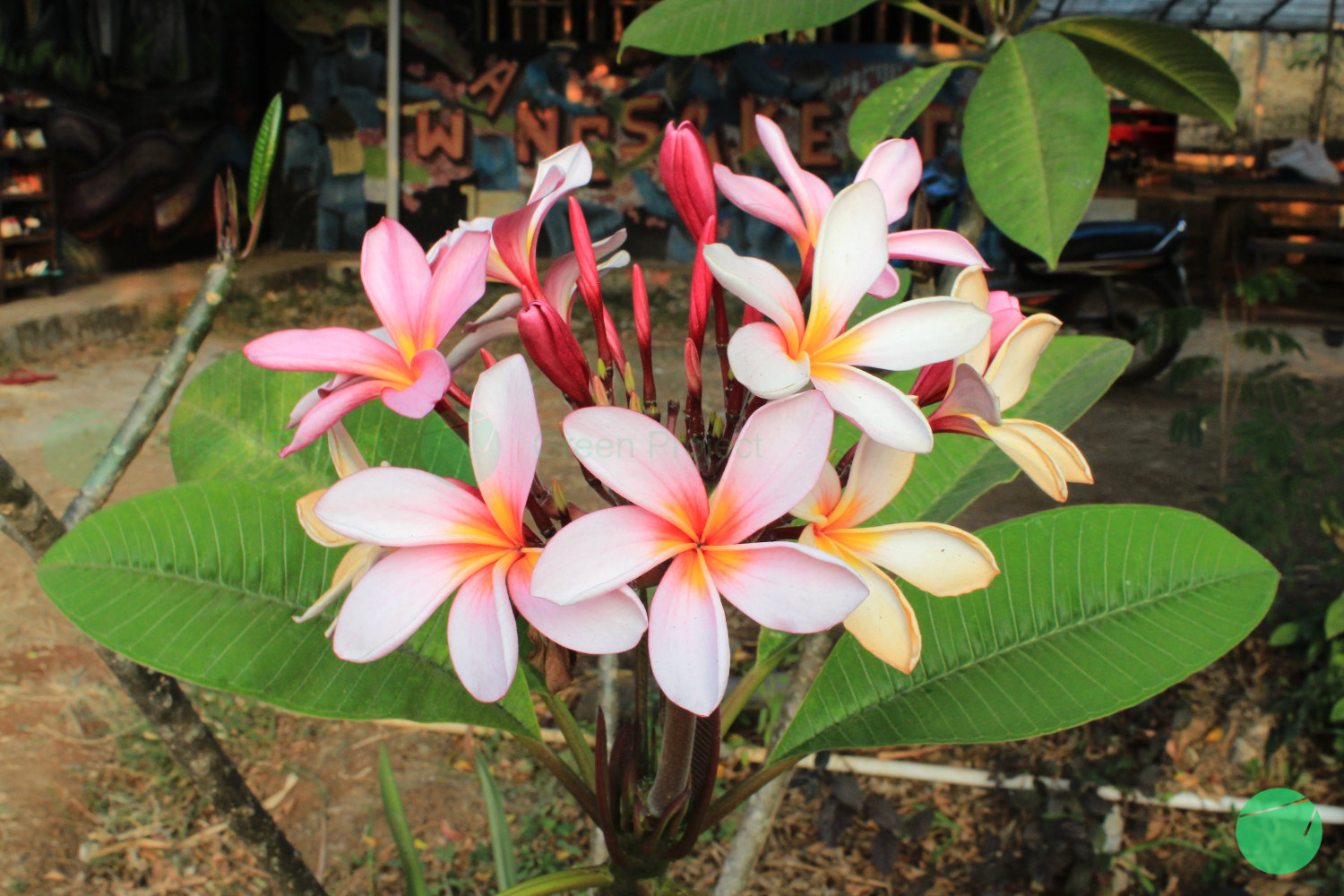
The frangipani tree features thick yet brittle branches covered in thin, gray bark that contains a milky sap. This sap can irritate the eyes and cause dermatitis in susceptible individuals.
The leaves have a rough texture; they are rounded but taper to a pointed tip, appearing in shades of glossy or dull green. Depending on the species or cultivar, the plant may grow in an upright, compact form or with an open, spreading habit.
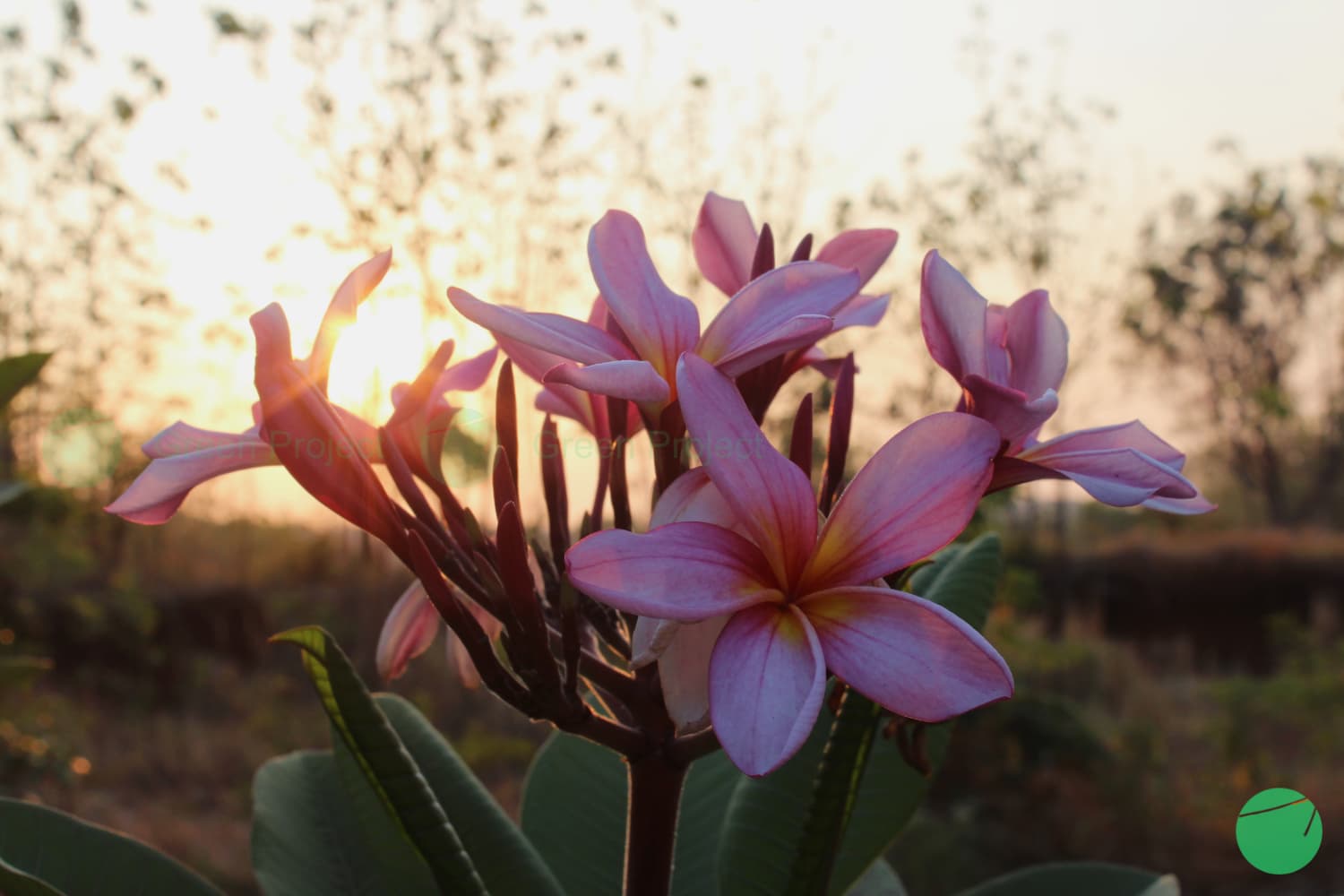
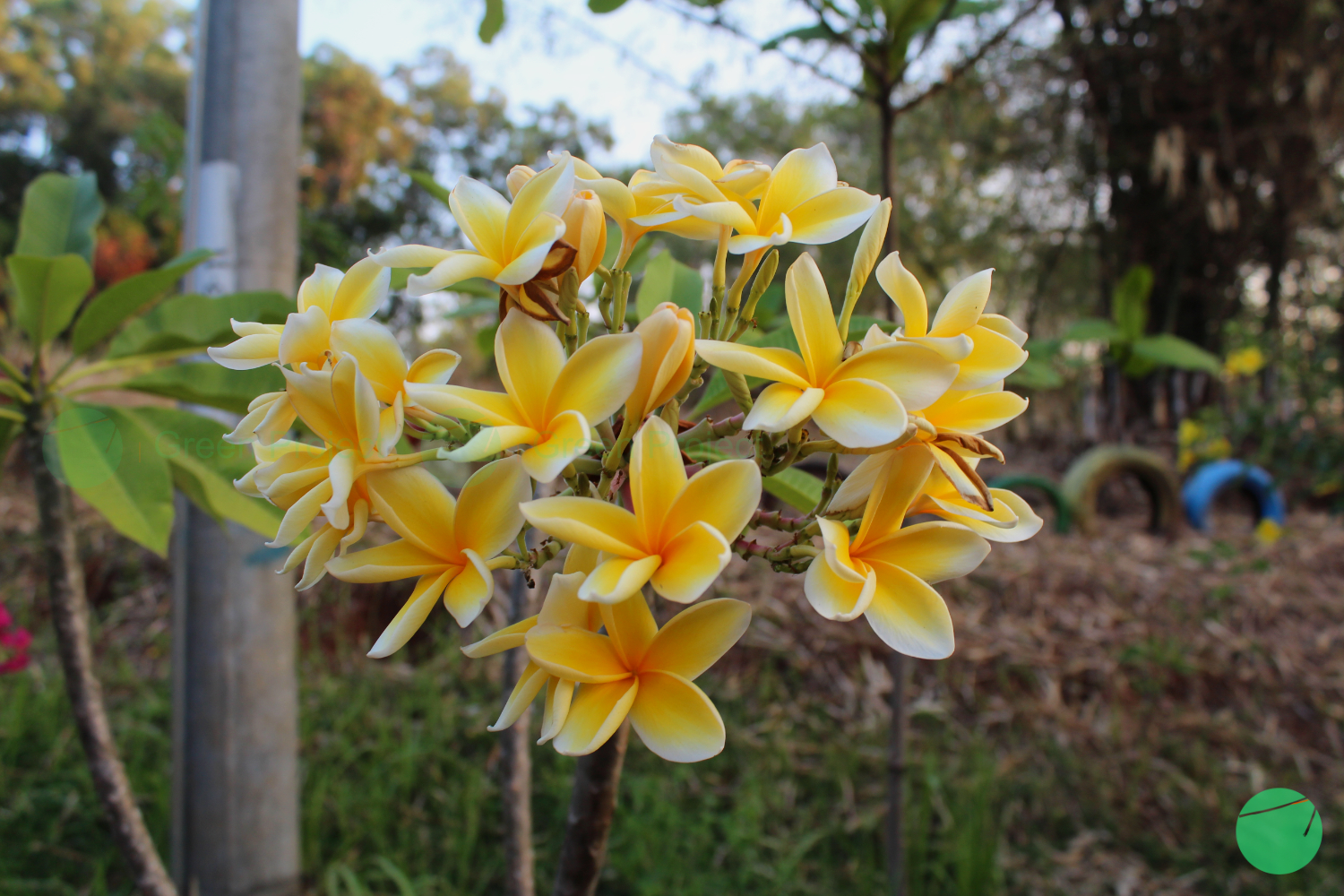
The flowers exhibit a range of color gradients, including various shades of pink, red, white, yellow, or pastel tones. They possess a distinct, fragrant scent—reminiscent of jasmine, citrus, and gardenia. Because they are pollinated by night-flying moths, the flowers release their full fragrance only after dark.
The number of blossoms per cluster varies significantly; some cultivars can produce as many as 200 flowers, while others may yield only 50 over the course of several months.
Frangipani trees thrive in bright sunlight, warm temperatures, and moderate humidity. They require well-drained soil—neither completely dry nor waterlogged. While the plant’s water requirements increase with greater light exposure, excessive watering can lead to root rot and the death of the plant (Mahr, 2023).
Health Benefits and Other Uses
Essential oils and fragrances extracted from the flowers of various Plumeria (frangipani) species are widely used in the perfume, cosmetic, and aromatherapy industries. A 2018 scientific report by Arora et al. states that Plumeria has been studied and shown to possess antimicrobial, anticancer, antipyretic, and antioxidant properties. Furthermore, various parts of the Plumeria plant have medicinal value and can be used in the treatment of skin cancer, filariasis, and other diseases.
Location
Bibliography
"ACIR Community." Usda.gov, 2023, acir.aphis.usda.gov/s/cird-taxon/a0ut0000000r8hMAAQ/plumeria. Accessed 21 Sept. 2023.
Arora, Shefali, et al. "A REVIEW ON PHYTOPHARMACOLOGICAL ACTIVITY OF PLUMERIA SPECIES." ResearchGate, Apr. 2018, www.researchgate.net/publication/342802886_A_REVIEW_ON_PHYTOPHARMACOLOGICAL_ACTIVITY_OF_PLUMERIA_SPECIES.
Mahr, Susan. "Plumeria." Wisconsin Horticulture, 2023, hort.extension.wisc.edu/articles/plumeria/#:~
=Plumeria%20is%20a%20genus%20of,to%20Mexico%20and%20the%20Caribbean. Accessed 21 Sept. 2023.Zumbroich, Thomas. "'Plumerias the Color of Roseate Spoonbills' - Continuity and Transition in the Symbolism of Plumeria L. In Mesoamerica." Ethnobotany Research & Applications 11:341-363, 2013, www.academia.edu/7612027/_Plumerias_the_Color_of_Roseate_Spoonbills_Continuity_and_transition_in_the_symbolism_of_Plumeria_L_in_Mesoamerica. Accessed 21 Sept. 2023.